David Porter is the pioneer of creating community with Next-Gen Residential and Retail Dining crafted through the lens of SOCIAL ARCHITECTURE™ and Abundance Thinking for campus dining programs.
On September 15th, DoorDash agreed to buy Grubhub’s campus dining business for $300 million. It is the platform, once called Tapingo, that students on more than 450 campuses use to order from their own campus dining locations and pay with their own dining dollars. The deal is expected to close in early 2027, and DoorDash has said it will keep expanding on campus.
Read that as what it is. A company that understands the student food dollar better than anyone has decided the campus is worth $300 million. DoorDash is coming for a larger share of your students’ meal plan money and their disposable income for food. Nobody at DoorDash has said so in these words, so let me be clear that this is my reading: it is a bet that when your students are hungry, your dining hall will be closed, restricted, or not worth the walk.
Here is the part nobody in the trade press wrote. You already have the business.
The Strongest Hand in Food Service
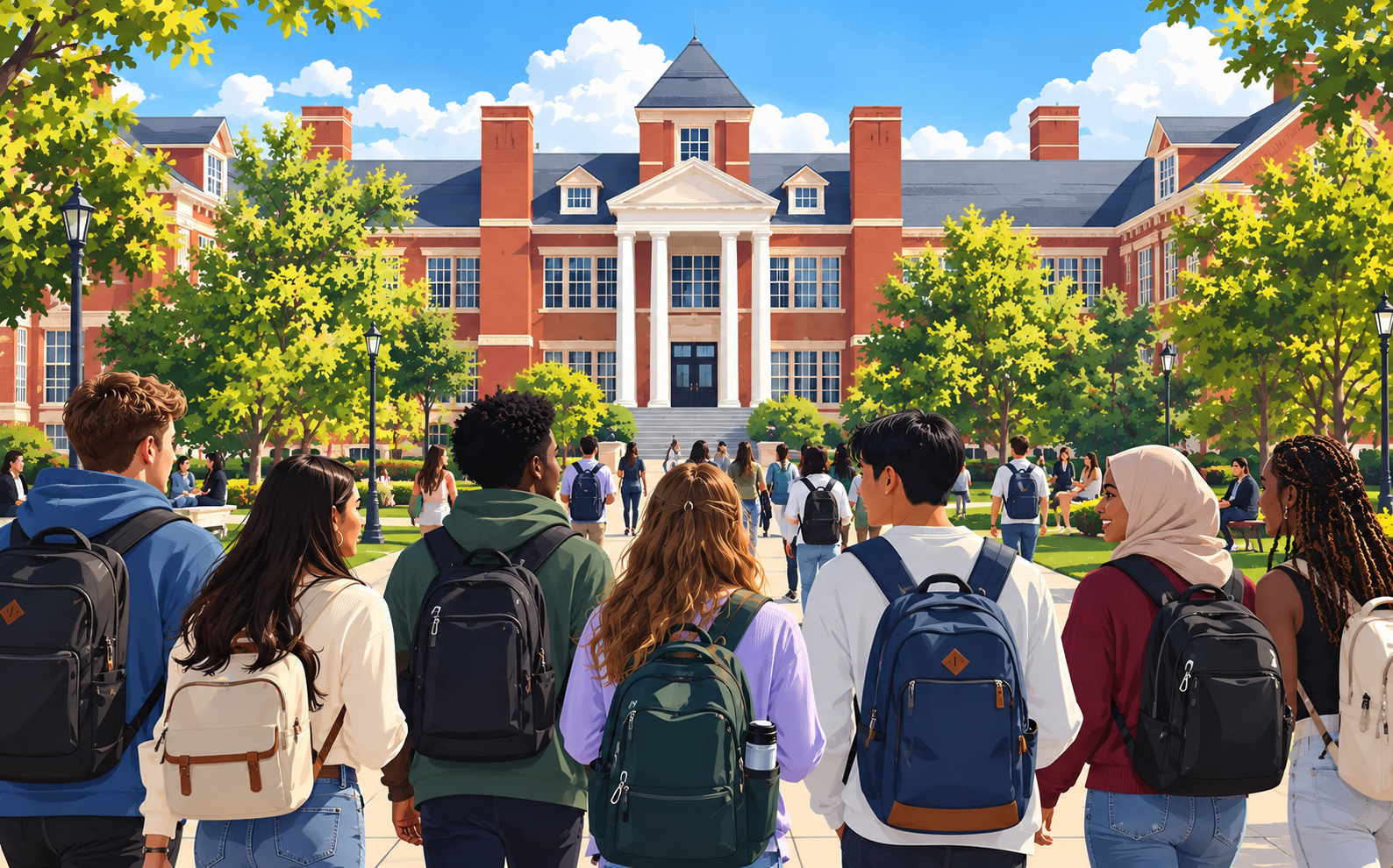
Think about what a residential dining program holds on the first day of the semester. The students live a few hundred feet from your kitchen. The meal plan is required, and it is already paid for. Most parents did not white-knuckle that purchase. They wanted the biggest plan on the menu, as an expression of love, because it promised to take care of their son or daughter. You have the customer, the money, the location, and the goodwill before you serve a single meal.
No restaurant in America starts with that hand. DoorDash certainly does not. To win one dinner from one of your students, it has to persuade her to pay a second time for a meal she has already bought from you, plus fees, plus a tip, and then wait for it.
A competitor in that position cannot beat you on strength. It can only capitalize on your weaknesses. And every weakness it has to work with is one we built ourselves.
Every Weakness Is an Opening
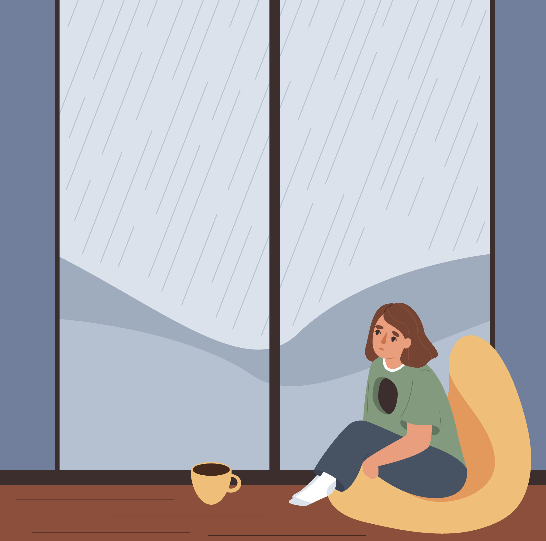
Two weeks after the deal was announced, a freshman explained to her student newspaper what she does when the dining hall closes for a mid-afternoon gap on weekends: “2-4 is exactly when lunch would be, so I end up DoorDashing.”
I am not singling out her campus. That sentence is spoken on every residential campus in America. And notice what it says. She did not choose delivery because it was better. She chose it because the door was locked.
Over the past thirty-six years on college and university campuses, I have watched programs create the same five weaknesses, and each one is an opening a delivery app is built to fill:
Fewer hours. Every hour cut from the schedule is an hour assigned to someone else.
Gaps between meal periods. The doors lock or the menu shrinks between breakfast and lunch and between lunch and dinner, and the student who got out of lab at 2:10 is on her own.
Limited or no late night. Hunger strikes at 10 p.m. That is the Student Clock, and it is the busiest hour on any delivery app.
Less on weekends. Shorter hours and thinner menus at the exact moments students have the most time to be together.
More restrictions. Rules about where, when, and how a student may use the plan she already paid for: swipe limits, timers, blackout periods, locations that do not count.
Each of those decisions looks like savings on a spreadsheet. Each one is a weakness, and a delivery platform does not need to be invited twice. That is not a criticism of DoorDash. It is doing what any good competitor does: finding the hours you are closed and the students you turned away, and showing up. And the cost does not stop at one dinner. The extra dollars are usually financed by family or by financial aid. Frustration compounds. By spring comes the financial recalibration, when the student and her parents conclude the housing and food money is better spent off campus altogether. That is no longer a lost meal. That is an empty bed.
The Kryptonite
I am not an antitrust lawyer or a technology analyst, and for all I know the new owner will prove to be a fine partner on the ordering side. My point is about what a delivery platform can and cannot do.
It can move food. It cannot make a friend.
When I ask newly minted freshmen what they were looking forward to about college back when they were high school seniors, the answer comes back in two words, almost universally: freedom and social. Nobody has ever told me “convenience.”
That is why SOCIAL ARCHITECTURE™ and Abundance Thinking are the kryptonite.
Abundance Thinking closes every door we have been leaving open. Hours built around the Student Clock rather than the labor schedule. No gaps. Real late night. Weekends that are as good as Tuesdays. Stations that stay full until the posted close. A plan a student can use without reading the fine print.
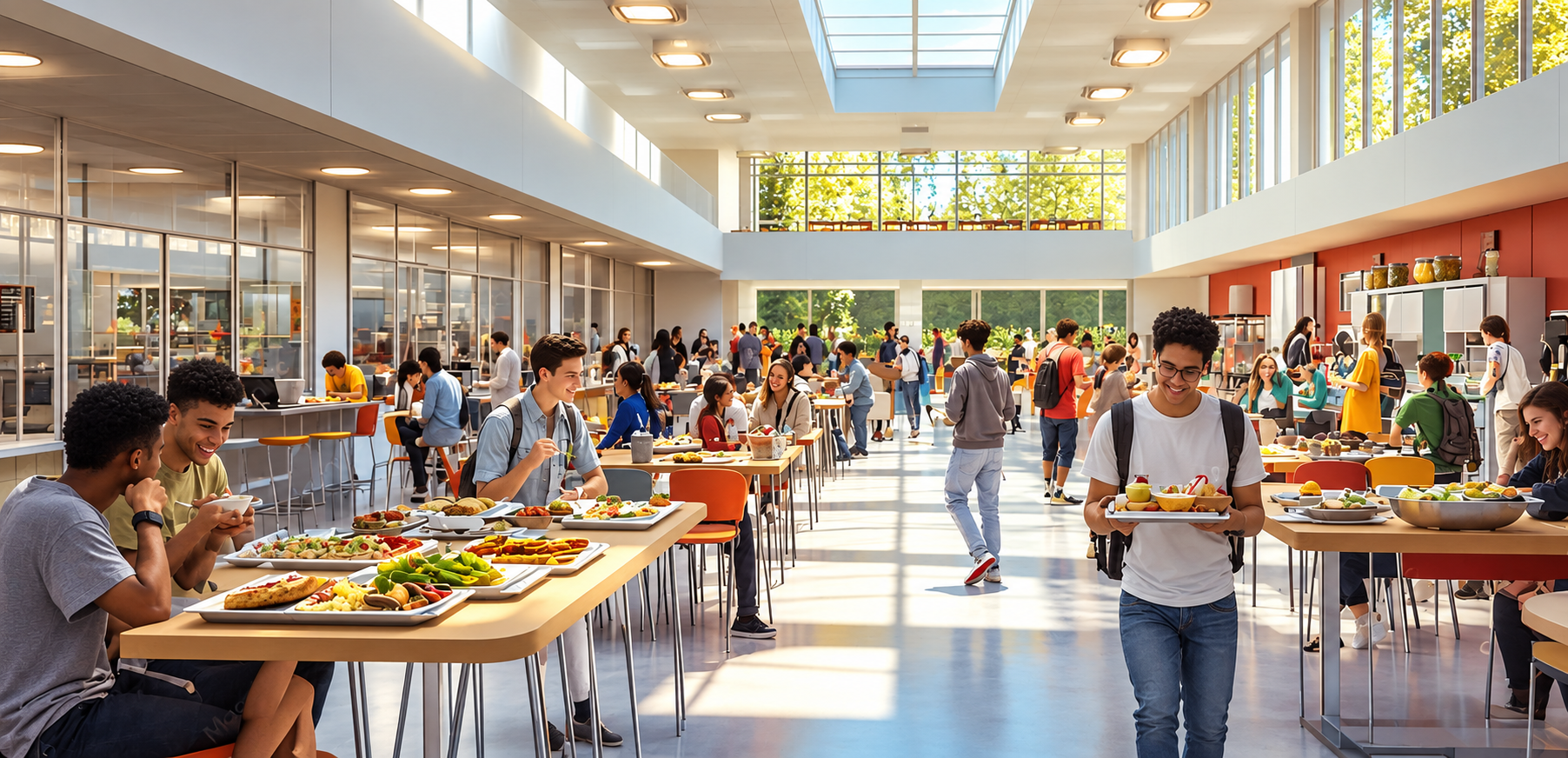
SOCIAL ARCHITECTURE™ gives her the reason to come that no app can match. The dining commons becomes a Social Coliseum: to a campus what the kitchen is to your home. It evolves a dining transaction into a social transaction, with food playing a supporting role. The same faces, at the same tables, at the same hours, until the accidental third dinner with the same crew quietly becomes a friend group.
A burrito bowl at the residence hall door in eleven minutes is a good product. It loses every time to a room where her friends already are.
And there is a number that tells you whether you are winning. If your residential commons holds roughly 70 percent meal plan participation, without equivalencies, swipes, or exchanges in retail propping up the count, you have a Social Coliseum, and the business is yours to keep.
Our mini documentary, SOCIAL ARCHITECTURE™: The Missing Ingredient, directed by Emmy Award-winning filmmaker Nick Nanton, was filmed on four campuses across two countries. The voices are first-year students describing what it feels like when a campus engineers belonging instead of leaving it to chance. Watch the mini documentary. Not one of them is describing an order confirmation.
We Have Everything We Need to Win This
So here is the challenge before the deal closes. Take your posted hours for every residential location, seven days a week. Circle every gap, every early close, every weekend cutback, and every rule that tells a student no. Then write one word next to each circle: DoorDash. That is the list of weaknesses you are letting a competitor capitalize on, and every item on it was a decision someone on your campus made.
Which means every item on it can be unmade. So stop. Losing your students’ food dollars is not only solvable, it is also preventable. You hold the customer, the plan, the location, and the room. Organize them through the lens of SOCIAL ARCHITECTURE™ and Abundance Thinking, and DoorDash can come for your campus all it wants. There will be nothing left to exploit, and the $300 million bet will have been placed on the wrong campus. The most valuable app on her phone will be the one she forgets to open at dinner.