

The Meal Plan Is a Method of Payment, Not a Strategy

There is a growing consensus in our field that meal plan architecture is the strategic imperative in campus dining. I understand the appeal, and I respect the people making the case. But I want to gently turn the argument over, because I think it has the order of operations backwards, and the order of operations is everything.

The meal plan is a method of payment. Hard stop. It is one end of a price-value proposition, and price is never judged on its own. It is judged against what it buys. So before you can design a meal plan, before you can even have an honest conversation about whether it is priced right, you have to answer a prior question: what is the dining program actually worth? Lead with the plan, and you have started the conversation in the wrong place. You are debating the checkout counter of a store no one has decided to enter.

A Visa Card Is Not the Reason You Shop

Let me put it the way I put it to campus leaders. Is a Visa card the most important part of a transaction? It is how the money moves, certainly. But nobody chooses a restaurant because of how they will pay. They choose it for what is on the plate and who is at the table. The method of payment is invisible when the value is high, and it becomes the entire conversation only when the value is low. When a student grumbles that the meal plan is too expensive, the instinct is to redesign the plan. But “too expensive” is almost always a value problem wearing a plan’s clothing. The price did not change. The thing on the other side of the scale was too light.

This is why I say the meal plan is secondary. Not unimportant, secondary. It is the second most important decision you will make, and it can only be made well after the first one. The first decision is the construct of the dining program itself: what it is, when it runs, where it lives, and whether it is built around the realities of student life or around the habits of the committee that designed it.

Build the Program First, Around the Student Clock

So begin where the value is actually created. How can your dining program be designed to serve your students and meet them where they live? That question has a real answer, and it starts with the student clock, the actual rhythm of a resident’s day and a commuter’s day, which look almost nothing alike and almost nothing like the nine-to-five of the professionals doing the planning.

A program designed around the student clock stays open when students are awake and hungry and looking for somewhere to be, not just when it is operationally convenient to serve. It carries the same energy on a Saturday night that it carries on a Tuesday at noon, because that is precisely when a student is deciding whether this campus is a place they belong or a place they leave on weekends. It puts dining where life already flows, in the academic core and the residential heart, not where the leftover square footage happened to be. It is designed for accidental collisions, the unplanned encounters between students that turn a building full of food into the social center of gravity of the entire campus. That is SOCIAL ARCHITECTURE™, and it is the work that creates value. None of it is a meal plan decision. All of it comes first.

When you get that construct right, you have built something worth paying for. You have manufactured value. Now, and only now, you have earned the right to talk about the plan.

Then Design the Plan to Maximize Access

At that point the meal plan has exactly one job: to provide the broadest, fairest, most generous access to the highest-value dining program you can build. That is the whole assignment. The plan is the on-ramp to the value, not the value itself.

Designed in that order, the familiar meal plan fights soften or disappear. Declining-balance structures get rebalanced, so no student is ever forced to choose between eating today and eating in April. Plans expand access rather than ration it. Commuters, who fund these programs through their fees just as residents do, stop being an afterthought and become invited guests at a table built for them, too. The plan stops being a fence around the dining hall and becomes a door into it.

Compare that to the backwards approach. When the plan is treated as the strategy, every design choice optimizes the payment mechanism while the program underneath it goes unexamined. You can engineer the most elegant plan in the country, and if it grants access to a program that closes at seven, empties out on weekends, and gives a student no reason to linger, you have built a beautiful door onto an empty room. The student feels the emptiness immediately. Then they tell you the plan is too expensive, and they are right, but not for any reason a plan redesign will fix.

First Things First

So are meal plans the most important part of campus dining, or the second most important? I will say plainly that they are the second, and that the distinction is not semantic. It is the difference between a scarcity question, what does it cost?, and an abundance question, what does it create? Scarcity starts with the plan, because the plan is where the cost lives. Abundance starts with the program, because the program is where the value lives. And value, not price, is what students are actually deciding about every single day.

Food is the excuse. Belonging is the outcome. The meal plan is simply how a student pays to get in the door. Build a program worth walking into, design the plan to open that door as wide as possible, and the price-value conversation takes care of itself. Get the order right, and almost everything else in campus dining gets easier. Get it backwards, and no plan, however clever, will ever feel like enough

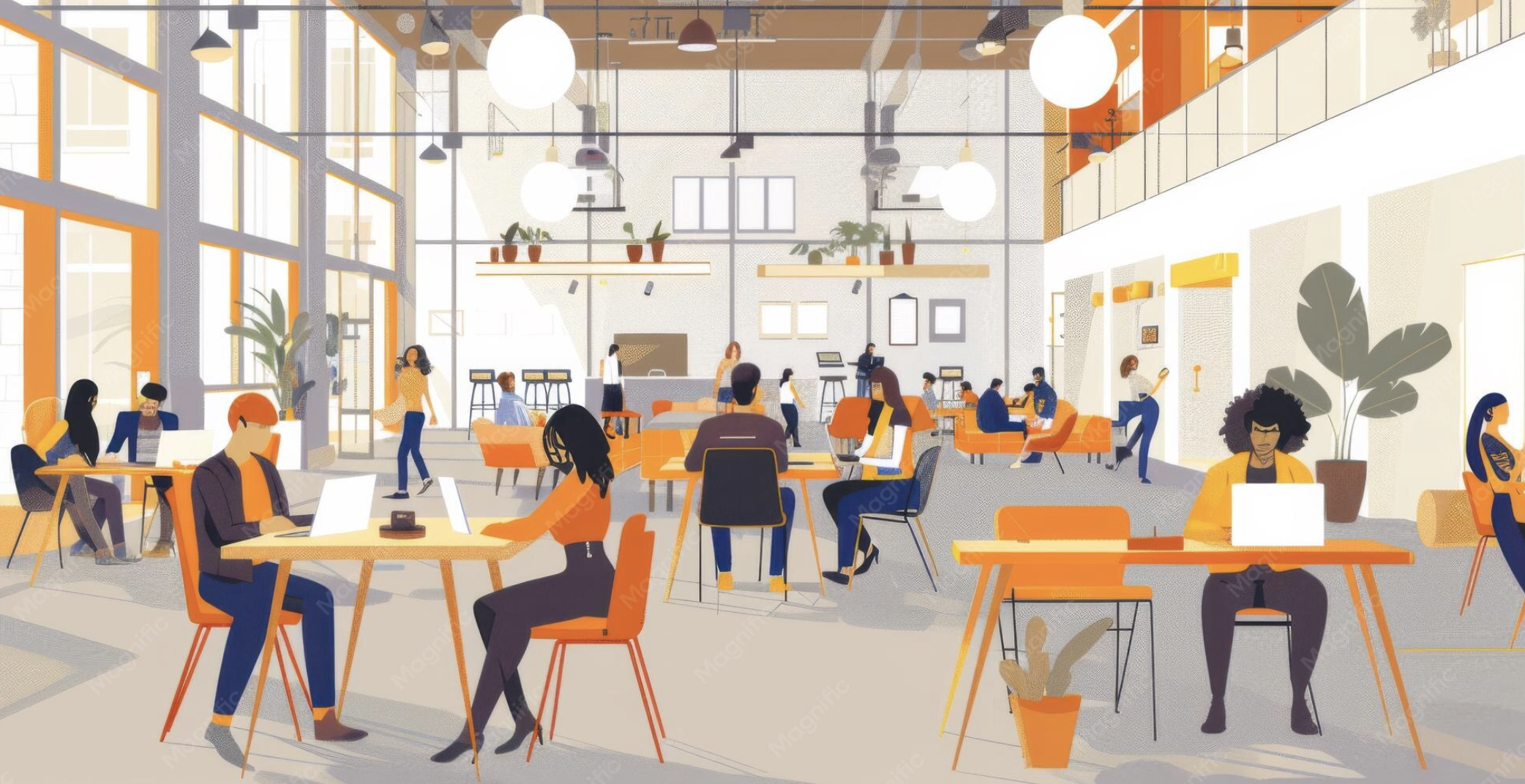
The Beginner’s Mind: Creating the Next Generation Student Union

There’s a saying in Zen practice: In the beginner’s mind, there are many possibilities, but in the expert’s mind, there are few.

I bring 55 years of combined hands-on operations and strategic planning experience to this work, all of it lived inside of fine dining kitchens, back of house and front of house operations, beginning in 1971 at the iconic Pillar House in Newton, Massachusetts, in the late 1980s at Harvard University, and since 1990, student unions, dining halls, and the campus-wide next generation residential and retail strategic plans we have pioneered by crafting them through the lens of SOCIAL ARCHITECTURE™ and Abundance Thinking. That experience is invaluable. It is the pattern library I draw on every time we take on a new campus, and there is no substitute for it.

But I have also been gifted with something experience can’t teach: the beginner’s mind gene. It’s second nature that when embarking on a new strategic planning exercise, my “tea cup” is empty and open to being filled with new opportunities and out-of-the-box thinking that often wait to be discovered and hide in plain sight. Many of our clients have commented that “David sees patterns and opportunities that in hindsight make perfect sense, yet they were not obvious to any of us.” No assumptions. No, “this is how it’s always been done.” Just one question: if I were an 18-year-old arriving here for the first time, would this campus, this student union, this dining commons, this food hall, pull me in, time after time, day after day, seven days each week, or insidiously encourage me to venture off campus to get my social connection, sense of belonging, and food and nutritional needs met?

That question is the whole method. Most student unions struggle not from a lack of expertise but from expertise that was never paired with fresh eyes, a beginner’s mind, the students’ lived experience, and meeting the students where they are. They are built by committees faithfully reproducing the unions of their own college years, designed for students, and an archetype that no longer exists. The beginner’s mind asks the obvious questions the expert stopped asking decades ago. Here’s what happens when you let it.

Question #1: Who is actually paying for this building?

The expert answers reflexively: the institution. We follow the money and find something remarkable. On many campuses, students fund the capital-intensive student union projects through their fees. The students are the investors. It is rare anywhere in business to have your investors and your customers be one and the same, and it changes everything: when you put students first, you put your investors first.

Seen fresh, the programming question becomes simple. What combination of services and amenities serves all of the students attending your institution? Not just commuters (non-residents), not just residents, not just the involved few, but everyone. If a student fee is funding the new student union, then the program should attract and support all who are funding the project. Administrators know that good things happen when students have more opportunities to engage socially: to make friends, problem-solve, collaborate, and innovate. The results show up as higher GPAs, longer stays, and a greater likelihood of graduating equipped for professional success. In a survey of college freshmen, more than 80 percent said the number one reason they’re going to college is to be well off financially. If the union is the center of campus life, it should deliver that return for every student investor, from every background, for life.

Question #2: When do students actually live?

The expert builds to the archetype. We observe actual students and see that one set of investors, commuters, has very different daily patterns than the other set of investors, resident students, and stay open to understanding how the realities of their daily patterns should influence the programming of the new building. The beginner also notices something else: a typical day for a resident student has little or no correlation with the typical day of the committee of career professionals responsible for programming the new center.

Not long ago, the “student clock” didn’t start ticking until Juniors arrived on campus and mom and dad drove off into the sunset. Those days are gone. Thanks to smartphones and social media, incoming freshmen arrive with a 24/7 history of social interaction with at least 500 of their closest friends. The irony is rich: Steve Jobs designed Apple’s headquarters to engineer face-to-face collisions between people, and Apple’s most famous product helped build a generation that struggles with exactly that. The replacement of face-to-face time with screen time has cost students many of the social skills they need in the professional world: civility, dignity, and the simple art of conversation. The union and the food hall is where they can be rebuilt.

But only if it’s open. The student center has the potential to be the accidental (intentional) collisions crossroads of your campus: the most socially rich nexus of students from all demographic groups, from morning to late night, seven days a week. We have cracked that code. The student center is the living room of the campus. I don’t know about your kids, but mine hung out in the living room after school, well into the night, and all weekend. A living room without a kitchen that’s open all the time is like a house with nobody home. If students can’t find safe, compelling on-campus venues to meet their social needs, they will go off campus to find them.

Question #3: Could I actually get there?

The expert sites the building where land is available. We walk the campus like a freshman and ask where life already flows. The union belongs in the academic core, where students travel through all day long on their way to and from class.

We ask a question experts find unglamorous: where do students park? Generous parking matters for two reasons. First, a catering and conference business can’t grow if guests struggle to park. Second, a union must offer real value to commuter students. It should pull them back to campus in the evening, and that requires generous free parking during those hours, so off-campus students can return easily and share a socially rich, on-campus college experience with hundreds of their contemporaries.

Question #4: Why is there still a bookstore?

Here, the beginner’s mind earns its keep because the expert is still defending a model designed for 1996. The textbook two-step is over. Inclusive Access moved course materials online, and with them went the seasonal foot traffic that legacy stores were built around. Students compare every campus transaction to one-tap Amazon convenience, so the store can no longer compete on price or assortment. It has to compete on convenience, belonging, and experience.

Look at the union with fresh eyes, and the answer is conflation. Students live integrated lives, moving fluidly between dining, studying, socializing, and shopping, yet we run each as a separate silo. Put the new campus store inside the union or directly connected to its retail dining operations, and the math transforms. Out-of-the-box beverage programs are a margin engine: a semester refill pass with a branded reusable tumbler converts occasional buyers into daily visitors at near-pure margin. And apparel is where identity lives, earning two to three times the gross margin of course materials, because students buy identity, not products. The store becomes a town square: part retail, part commons, part institutional showcase.

The Expert Builds the Past with a Lot of “Harvested Natural Light.” The Beginner’s Mind Disrupts by Programming and Building What’s Next.

In Emotional Intelligence, Daniel Goleman notes that academic I.Q. accounts for only about 20 percent of a person’s professional success. The next generation student union is a classroom outside the classroom, teaching the social I.Q. responsible for much of the other 80 percent. But you can’t build it from the expert’s mind, because the expert’s mind builds the union that worked in 1996.

Walk your campus as if you’ve never seen it. Ask who my customers are and what their lived experience is. Ask who pays, when students live, where life flows, and why each legacy space still exists. The beginner’s mind sees many possibilities. Your students are waiting inside one of them. There are few better gifts you can give them, and for student investors, it’s an exceptional return on investment that can positively influence the arc of their lives.

Robots and Ghost Kitchens Won’t Transform Campus Dining, But Next-Gen Residential and Retail Strategic Planning Can

This week’s news that a major delivery-robot provider is pulling more than 1,200 units off U.S. campuses, redeploying them to grocery markets where the economics are stronger, landed as a surprise for many dining administrators. For the campuses affected, it is an unplanned disruption, but disruption has a way of opening doors to other opportunities. It points to an important reality: technology vendors will always follow their best opportunity, and that opportunity won’t always align with what is best for your campus. The real question for campus leaders was never whether robots, apps, or automation can make dining faster. It is whether those tools contribute to belonging, strengthen retention, and generate new value for the institution. Those outcomes aren’t technology problems, they are strategic planning opportunities, and they are entirely within reach.

Let me be measured about automation, because I am not here to say that technology and automation does not have its place on a college campus, it most certainly does. When campuses cannot find enough labor to run a full operation through the late hours of the evening, and many genuinely cannot, a ghost kitchen solution that fulfills orders and delivers them via robot can solve a real operational headache. Mobile ordering can shorten a line that wraps around the building at noon. There are several opportunities in which technology and automation can be leveraged.

What three decades and almost 500 higher education clients have taught me is that automation is a tool, not a strategy. It can move a transaction faster and at lower cost, and that is genuinely useful, but it cannot decide whether students feel they belong, or whether a program creates value instead of leaking it. Those are the outcomes that actually determine a program’s future, and they are won through planning, design, and leadership. The institutions that pull ahead are not the ones with the most impressive machines, they are the ones that plan with intention, design deliberately for human connection, and lead from abundance instead of scarcity. Three disciplines do that work, and they are the through-line of everything that follows: Next-generation strategic planning, SOCIAL ARCHITECTURE™, and Abundance Thinking. 

The Real Opportunity Isn’t Speed

The biggest opportunities in campus dining rarely live at the level of throughput, they live at the level of architecture. SOCIAL ARCHITECTURE™, a philosophy our firm pioneered, is the intentional design of the spaces, hours, policies, and human moments that turn a building full of food into the center of gravity of campus life. It is not decoration, and it is not a slogan, it is a planning framework with a track record, and campuses that apply it see the payoff exactly where it matters most: Deeper belonging, higher meal plan participation, stronger housing occupancy, and measurable gains in retention and recruitment. A robot can speed up a line. It cannot architect a community; only deliberate planning can.

When students share frustrations about dining, administrators hear the surface noise. The line was long, the app was clunky, the entrée was mediocre. They understandably reach for a technological fix, but underneath those comments is almost always an opportunity that technology alone can’t capture, and it usually comes down to access and design. Meal plans that could expand access rather than limit it. Weekend hours that could carry the same energy as the weekday program, precisely when students most want connection. Declining-balance structures that could be rebalanced, so no student ever feels forced to choose between eating today or eating tomorrow. Dining halls that could invite students to linger at a table rather than simply move them through a line.

Add the most sophisticated robot in the world to a program before tapping those design opportunities, and you’ll have made the experience faster without making it more inviting. The line was never the real constraint. The opportunity is in the design.

Ghost Kitchens Optimize Away the One Thing That Matters

Ghost kitchens deserve a specific note, because they are attractive and, in a residential setting, frequently backwards. A ghost kitchen is, by definition, a kitchen with no room, no tables, no commons, no reason to stay. It is built to optimize the transaction and strip away everything around it. In a dense downtown delivery market, that can be brilliant, on a residential campus, you are paying to engineer away the single most valuable thing your dining program produces, connection.

The research on this is not soft. Loneliness is one of the most reliable predictors of whether a student stays or leaves, and it does real damage to health and to persistence. What protects against it is not a perfect burrito delivered to a locker. It is the accumulation of small, low-stakes human contact, the strength of weak ties, that happens when students eat in the same room at the same time, day after day. The friend you make because you sat at the same table twice. The professor you finally talk to in line. The Tuesday-night regulars who notice when you don’t show up. A ghost kitchen is designed to delete exactly those encounters. Efficient? Yes. But you have optimized away the very outcome you are being paid to create. Food is the excuse. Belonging is the outcome. When we forget that, every efficiency we buy quietly works against us.

Abundance Asks a Better Question Than Automation

This is where Abundance Thinking changes the entire conversation. It is not optimism for its own sake. It is the single most consequential strategic choice a campus makes about its dining program, because the mindset you plan from determines the program you end up with. A scarcity mindset asks, “What does it cost?”. Automation is irresistible to a scarcity mindset, because it promises to drive that number down. Abundance Thinking asks a fundamentally different and more profitable question: “What does it create?”.

Run a robot or a ghost kitchen through that second question and the answer is honest, and a little deflating. It creates speed, it creates labor savings, and it creates consistency. What it does not create, on its own, is energy, community, retention, or the kind of campus a parent walks onto and instinctively trusts with their child for four years. Those are products of design and of people, not of machinery. What we are really after is predictable abundance: a program so consistently generous and dependable that students stop rationing their access and start building their lives around the table. That is what creates lasting value, for students and for the institution’s bottom line alike, and it is precisely what a machine, on its own, can never manufacture.

I am not arguing technology has no place in an abundant program. Quite the opposite. Used well, it is what I call invisible intelligence: automation deployed specifically to support human connection rather than replace it. Let a robot cover the overnight grind so your staff is rested and present during the dinner rush, when students actually want to be greeted by name. Use the app to clear the line so people spend their time sitting and talking instead of standing and waiting. Let predictive systems keep the program reliably stocked so students stop hoarding and start trusting. That is technology in service of belonging. It is the difference between a tool that amplifies a strong program and a gadget bolted onto one that still has untapped potential.

This is also why this week’s news should be clarifying rather than alarming. A campus that built its dining identity around a genuinely abundant, well-architected program, and treated delivery robots as a welcome convenience on top of it, loses a convenience, not its heart. The architecture stays. That is the whole point. Own the thing that creates belonging and treat the technology as the helpful add-on it is. Just don’t confuse the two.

Is It Time to Revisit Your Strategic Plan?

Moments like this are a good prompt to step back and ask a bigger question. When did you last take a fresh, honest look at your residential and retail dining strategic plan? Technology partners will come and go, vendors will shift their focus, and the delivery landscape will keep changing. Strategic planning is the one investment that compounds. A robot depreciates, a delivery contract expires, and a vendor eventually moves on, but a great plan, grounded in SOCIAL ARCHITECTURE™ and Abundance Thinking, keeps paying dividends in belonging and revenue year after year. That is the difference between chasing the next tool and building something that lasts.

At Porter Khouw Consulting, this is the work we love. Over more than two decades and almost 500 higher education clients in all 50 states, throughout Canada, the UK, and Saipan, we have helped institutions reinvent their next-gen residential and retail dining plans in ways that recapture the food dollars students currently spend off campus, grow voluntary meal plan participation, strengthen housing occupancy, and turn dining into the social heartbeat of campus life. We start by listening, with market studies, student focus groups, and a clear-eyed look at what is and isn’t working, and we finish with a phased, board-ready road map you can actually execute.

Robots can be a wonderful part of that picture, or no part of it at all. Either way, the foundation is the same: a residential and retail program designed around belonging, abundance, and revenue, planned with intention. If this moment has you wondering whether it’s time to revisit your own plan, to grow revenue and create even more value for your students, with or without robots, we would be glad to talk it through. A 30-minute conversation is often all it takes to see the opportunity hiding in plain sight.