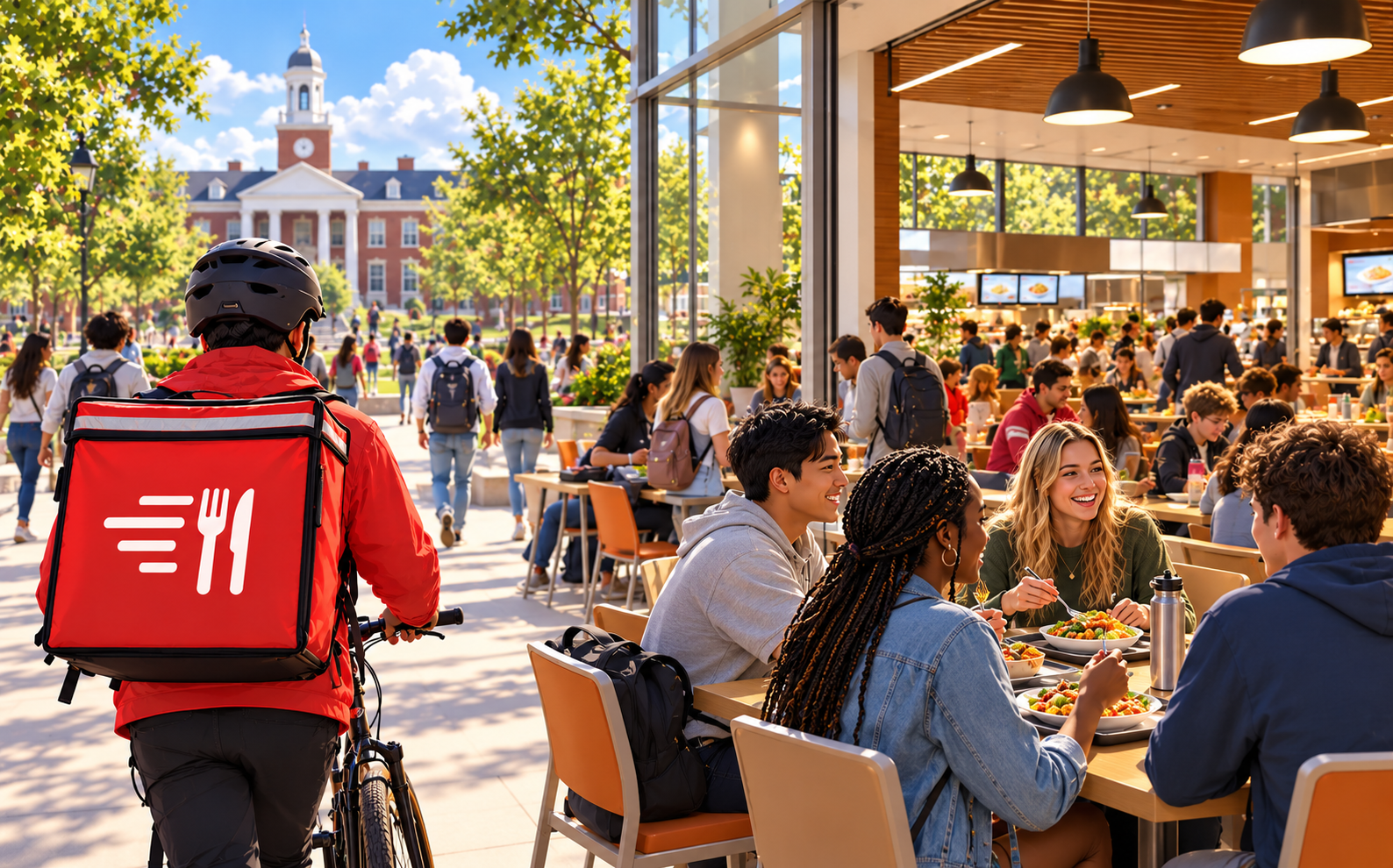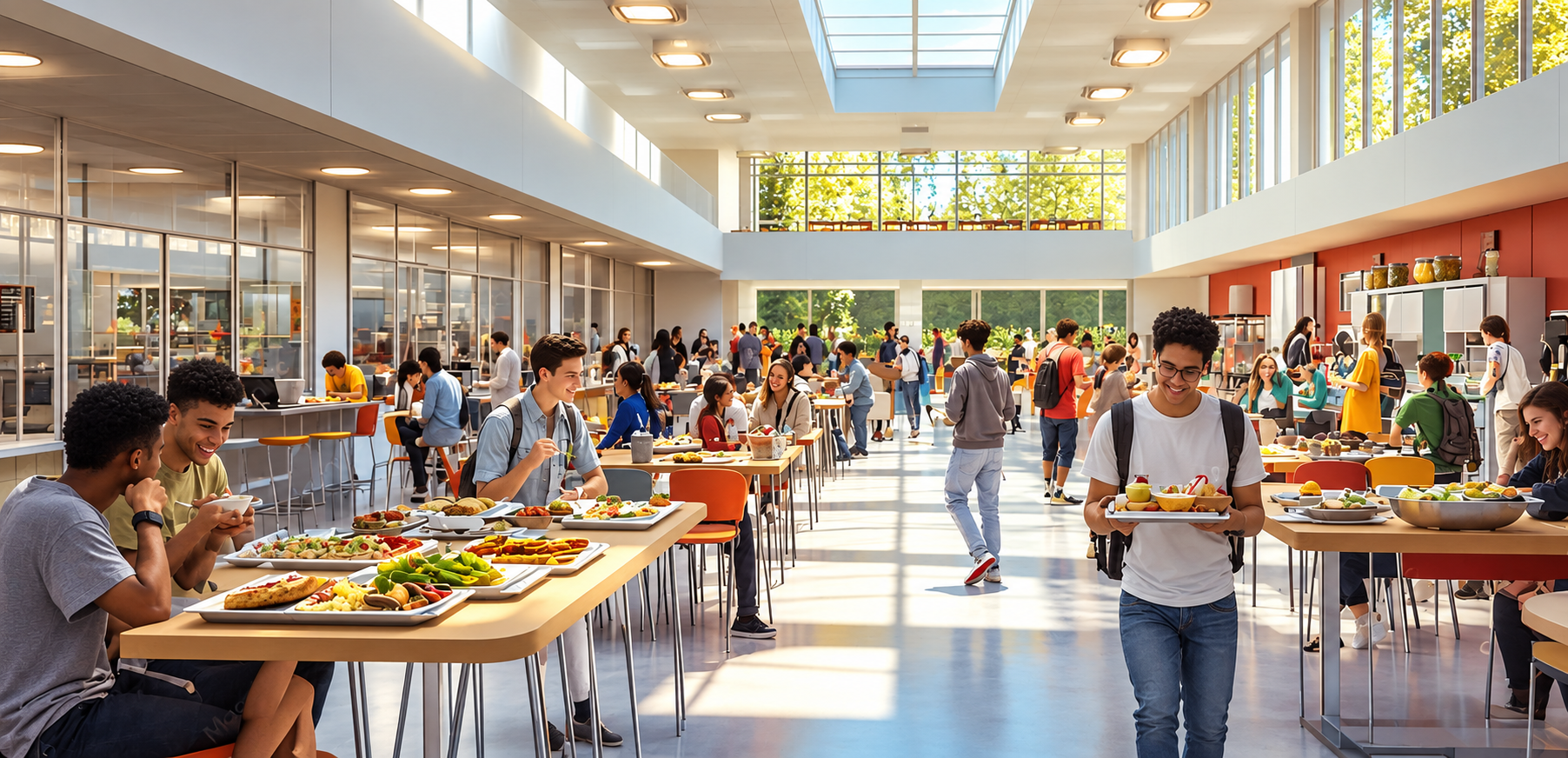
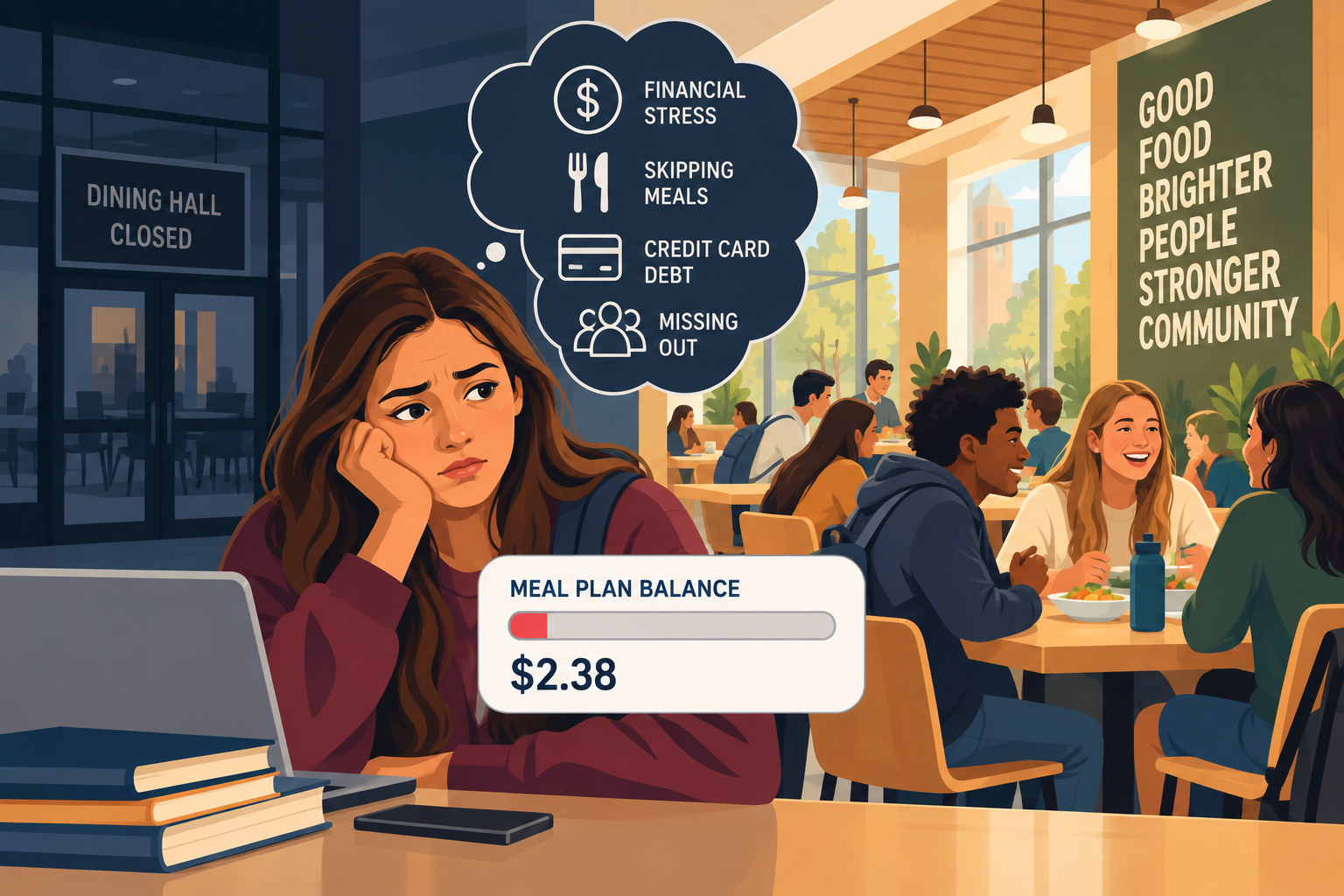
What Many Campuses Could Continue Getting Wrong in 2026

Every period of rapid change exposes a mindset divide.

Those who operate from abundance move forward with intention, confidence, and clarity. Those who operate from scarcity cling to familiar structures, optimize for short-term protection, and slowly erode the very outcomes they are trying to preserve.

By 2026, artificial intelligence will be deeply embedded across higher education. Yet the most consequential failures will not be technological. They will be strategic and cultural. Many campuses will get the future wrong, not because they lack tools, but because they misunderstood what actually drives student success.

What follows are the most common and costly mistakes institutions will make by 2026 if they fail to connect dining, belonging, and retention into a single operating system.

One: Continuing to Lead From a Scarcity Mindset

Many campuses will continue to make decisions rooted in fear rather than possibility.

Scarcity thinking shows up in defensive budgeting, risk avoidance, and the belief that resources must be tightly controlled rather than intentionally deployed. By 2026, institutions trapped in this mindset will use AI primarily to cut, reduce, and restrict.

What they will miss is that scarcity thinking undermines community. It signals to students that access is conditional, support is limited, and belonging must be earned.

Campuses that fail to shift toward predictable abundance will struggle to build trust, stabilize enrollment, or improve persistence.

Two: Discounting Face to Face Interaction and Over Automating Relationships

Many institutions will assume that automation is inherently modern and therefore inherently better.

By 2026, campuses that over automate student to student and student-to-service interactions will see a quiet erosion of connection. Self-service kiosks will replace eye contact. Chatbots will replace conversation. Apps will replace hospitality.

Students will experience efficiency without warmth and convenience without care.

The result will not be dissatisfaction with services. It will be a deeper sense of isolation.

Belonging is built face-to-face. Campuses that discount this truth will pay for it in retention.

Three: Treating a Food Service Contractor as a Trusted Independent Advisor

One of the most consequential missteps campuses will continue to make is relying on a food service contractor for independent strategic guidance.

Contract partners bring valuable operational expertise, and in many cases, express a strong intent to serve students well. But their fiduciary responsibility is to their stockholders. That structure can naturally shape recommendations towards what is in the best interest of the food service contractor’s bottom line, rather than what is most aligned with an institution’s unique culture, long-term goals, and student success outcomes.

For that reason, campuses benefit from clearly separating the development of an independent strategy, mapping a course forward, and “steering the ship” from contracted execution. By 2026, institutions that establish this distinction will be better positioned to design dining programs around belonging, retention, and lived student experience, while still leveraging contractors effectively to deliver at a high level.

Four: Addressing Food Insecurity Administratively Instead of Experientially

Many campuses will continue to treat food insecurity as a compliance issue rather than a lived experience.

They will build programs, eligibility criteria, and reporting structures while students quietly opt out due to stigma and shame.

Addressing food insecurity administratively keeps the problem visible on paper and invisible in practice.

Institutions that fail to implement experiential solutions rooted in predictable abundance will continue to see anxiety, disengagement, and academic disruption tied directly to food access.

Five: Relying on National Benchmarking Instead of Their Own Students’ Lived Experience

By 2026, campuses will have access to more benchmarking data than ever.

Many will mistake national averages for insight.

Benchmarking can be useful, but it is no substitute for understanding the lived experience of your students on your campus. Over-reliance on external comparisons will lead institutions to miss local patterns of loneliness, disengagement, and unmet need.

Your students are not average. Their experience is the data that matters most.

Six: Misdiagnosing Retention as Primarily Financial or Academic

Perhaps the most expensive mistake campuses will continue to make is assuming low fall-to-fall retention is driven primarily by financial pressure or academic difficulty.

By 2026, institutions that fail to recognize belonging as a core retention driver will forgo millions, and in some cases tens of millions, of dollars in lost tuition, room, and board revenue.

Students do not leave only because college is hard or expensive.

They leave because they feel invisible. Disconnected. Unknown.

When students do not form friendships, routines, and a sense of place, they disengage.

Seven: Failing to Connect Dining to Retention and Persistence

Even as evidence mounts, many campuses will continue to treat dining and retention as separate conversations.

By 2026, institutions that fail to connect the dots will continue to invest heavily in recruitment while leaking students out the back door.

Dining is the most consistent, daily point of contact between students and the institution. When designed intentionally, it stabilizes routines, fosters connection, and anchors belonging.

Ignoring this relationship is not neutral.

It is costly.

Eight: Scapegoating Meal Plans Instead of Fixing Mediocre Dining Programs

By 2026, many campuses will continue to blame meal plans for student dissatisfaction when the real issue is the quality, variety, relevance, and experience of the dining program itself.

Meal plans are an easy target. They are visible, financial, and poorly understood. When dining lacks energy, responsiveness, or connection to student life, the structure of the plan becomes the scapegoat.

This misdiagnosis allows institutions to avoid the harder work of redesigning food, spaces, schedules, hospitality, and engagement. It confuses the container with the content.

Strong dining programs make meal plans feel valuable, flexible, and intuitive. Weak dining programs make any meal plan feel restrictive, regardless of price or structure.

By blaming meal plans instead of addressing program mediocrity, campuses delay meaningful reform and continue to frustrate students.

Nine: Investing Hundreds of Millions in Housing While Wrapping Residential Life Around Mediocre Dining

By 2026, some campuses will continue to invest hundreds of millions of dollars in new residence halls while leaving the campus dining program fundamentally unchanged.

These institutions will build beautiful buildings, modern amenities, and attractive rooms, then wrap residential life around a dining experience that lacks energy, relevance, flexibility, or community.

This is a structural mismatch.

Residential life does not succeed on architecture alone. It succeeds on daily experience. Dining is the primary daily experience that anchors residential patterns, shapes routines, and determines whether students leave their rooms and engage with one another.

When dining is mediocre, even the best housing struggles to deliver on its promise. Students retreat to their rooms. Isolation increases. Common spaces underperform. The return on capital investment quietly erodes.

Campuses that fail to align residential life investments with a strong, intentional dining program will discover that bricks and mortar cannot compensate for a weak social core.

Ten: Turning a Blind Eye to the Variety Paradox

By 2026, some campuses will continue to assume that offering more choice automatically leads to greater satisfaction.

In reality, the opposite is often true. Excessive, poorly curated variety overwhelms students, increases decision fatigue, and diminishes perceived quality. This phenomenon, known as the variety paradox, results in dining programs that look expansive on paper but feel confusing, inconsistent, and emotionally unsatisfying in practice.

When variety is not intentionally organized through SOCIAL ARCHITECTURE™, students struggle to form routines, favorites, and social habits. Choice becomes noise. Satisfaction declines. Connection weakens.

This paradox is explored in greater depth in The Social Architecture Digest, where the relationship between choice, belonging, and behavioral outcomes is examined through the lens of lived campus experience. Leaders who want to understand why “more” so often produces less should review David Porter’s post on the variety paradox at porterkhouwconsulting.com.

Campuses that ignore this dynamic will continue to invest in breadth rather than coherence, missing the opportunity to use dining to anchor community and connection.

Final Thought: Be Your Own Advocate

By 2026, the campuses that succeed will be those willing to advocate for themselves.

You do not need to be a food service or dining subject matter expert to seek, secure, and benefit from one. In fact, the most effective leaders understand when independent expertise is essential and when conflicts of interest must be avoided.

Dining on most campuses is the single largest revenue-producing auxiliary service. It also has the potential to exert the single greatest influence on the day-to-day interpersonal experience and emotional well-being of students. Few decisions carry as much financial, cultural, and human consequence.

There is no free lunch.

Hope is not a strategy when inking a food service agreement. And neither is what many campuses still believe: that leverage and strength in a so-called partnership comes primarily from the ability to threaten termination for cause or for convenience, or that a food service provider will make financial sacrifices and simply do the right thing by prioritizing student outcomes.

In our experience reviewing and renegotiating hundreds of food service contracts across North America, this assumption has proven to be one of the most insidious forms of misdirection in higher education. About ninety-five percent of the time, it produces the opposite result. Rather than compelling compliance, it shifts power to the food service provider, ultimately forcing the institution to capitulate.

True leverage is not rooted in threats. It is rooted in clarity, independent thought, intentional design, and contractual precision. It comes from crafting solutions and programs through the lens of SOCIAL ARCHITECTURE™ and predictable abundance, and from designing agreements that align incentives with outcomes from the start.

There is one more quiet failure that too many campuses rationalize.

The failure to act.

Too often, leaders justify inaction with a noble sounding excuse: we do not have enough time to do this right, so let us simply extend the food service contract for another year. That decision feels safe. It feels prudent. It feels temporary.

In reality, it is one of the most consequential choices an institution can make.

Extending a contract without addressing structural misalignment delays progress, compounds mediocrity, and sends a clear signal that convenience outweighs courage. Another year quickly becomes another cycle. Another cohort of students experiences the same missed opportunity for connection and belonging.

Courage is not the absence of fear. It is the willingness to act despite it.

A more contemporary way to say it comes from leadership research rather than Hollywood: courage is choosing the harder right over the easier wrong.

Which independent food service subject matter expert you hire matters. Experience matters. Wisdom matters. Institutional knowledge and historical context matter.

The campuses that thrive will be those that saddle up anyway. Those who choose independent thought over default decisions, intentional design over delay, and human outcomes over institutional comfort.

That choice remains available.

Time is not neutral. It either serves your students or erodes their experience while you wait.


Invisible Intelligence: Why the Future of Campus Dining and Student Success Depends on AI That Protects Human Connection

Higher education is standing at a defining moment.

Not a trend cycle.
Not a technology upgrade.
Not another strategic initiative.

A defining moment.

Artificial intelligence has moved from the margins to the mainstream with remarkable speed. It now touches nearly every aspect of daily life, from the devices in our pockets to the systems that power classrooms, residence halls, and campuses. Colleges and universities are racing to adopt AI, deploy it, and demonstrate that they are keeping pace.

Some have likened the impact of artificial intelligence on human civilization to the invention of fire, a foundational force that permanently altered how we live, work, and relate to one another. Many believe this transformation will not unfold over generations; within the next three to five years, it will reshape institutions faster than most are prepared to respond.

Yet the most important question before higher education is not how fast we adopt AI.

It is how intentionally we integrate it.

When technology is poorly designed, it does more than fall short. It erodes trust, fragments community, and replaces human connection with transactional efficiency. When designed with purpose and embedded thoughtfully and invisibly, however, technology can do something far more powerful.

It can strengthen human connection rather than diminish it.

That is the central promise of technology and AI integration when it is guided by a simple but non-negotiable principle.

Supporting, not replacing, human connection.

Why Campus Dining Is the Right Place to Lead

Campus dining occupies a unique and often underestimated position at the intersection of technology, humanity, and student success.

It is one of the most universal experiences on campus. Almost every student participates. Every day. Often multiple times per day. Dining accompanies students through stress and celebration, loneliness and friendship, transition and growth.

Students may skip lectures, change majors, disengage from programs, but they do not stop eating, whether on campus or off.

This makes dining far more than a support service. It is a mission-critical social and emotional infrastructure. For decades, SOCIAL ARCHITECTURE™ has demonstrated that dining is where community forms, belonging is reinforced, isolation is reduced, and students feel seen, known, and connected.

Because of its frequency, universality, and emotional resonance, campus dining is one of the most powerful environments on a college or university campus for getting AI right, or getting it quietly and profoundly wrong.

AI as Invisible Infrastructure

The governing principle is clear.

Technology and AI must function as invisible infrastructure, supporting excellence while intentionally fostering planned serendipity, accidental collisions, human presence, and face-to-face interaction.

AI should never dominate the experience. It should not replace conversations or become the interface between people.

Like electricity or water, AI should always be available, rarely noticed, and quietly effective.

Its role is not to perform humanity.

Its role is to remove friction so humans can.

The Exponential Effect of AI in Dining

The true power of artificial intelligence in campus dining is not linear. It is exponential.

Dining already represents the most frequent, universal, and emotionally charged point of contact between students and the institution. When AI is layered onto this environment with intention, it does not simply make dining more efficient. It multiplies its impact as a catalyst for human connection.

AI enables dining to function as a living system that senses patterns, anticipates needs, adapts in real time, and continuously improves the conditions for interaction and belonging. Because dining happens every day, often multiple times per day, even small improvements compound rapidly. Over weeks and months, those gains become transformational.

When developed and implemented properly, AI allows dining to become the single most powerful daily tool on campus for reshaping the social landscape. It strengthens belonging by increasing access and reducing friction. It improves emotional well-being by normalizing care and presence. It supports academic success by stabilizing routines and reducing stress. It reinforces residential life by drawing students into shared spaces repeatedly and predictably.

Most importantly, it improves retention and persistence because students who feel connected stay. It strengthens enrollment because campuses known for belonging attract students who want to thrive, not simply attend.

This is predictable abundance in action. AI ensures that food, space, timing, and experience align reliably with student needs, without scarcity, stigma, or interruption. SOCIAL ARCHITECTURE™ ensures that these systems are intentionally designed to pull students together, not push them apart.

AI does not create connections on its own. But when paired with dining, it amplifies the conditions that make connection inevitable.

The Playing Field, the Arena, Ground Zero

When organized intentionally, dining on a college or university campus can become the single most potent catalyst for richer human interaction. Through the strategic use of artificial intelligence, Porter Khouw Consulting develops strategies that explicitly protect and enrich face-to-face connections.

Viewed through the lens of SOCIAL ARCHITECTURE™ and predictable abundance, campus dining becomes the playing field, the arena, ground zero. It is the place where community is formed, relationships take root, and belonging becomes visible and measurable.

AI functions as the neural network, the connective tissue that strengthens the campus social fabric by increasing the frequency, quality, and likelihood of meaningful human interaction.

The outcomes are both measurable and profound. Reduced loneliness. Improved emotional well-being. Increased academic success. Stronger residential persistence. Higher retention and enrollment.

Final Thought

The most powerful force on any campus is not artificial intelligence.

It is human connection.

Face-to-face interaction. Empathy. Recognition. Friendship. The simple, repeated moments in shared spaces where students are seen, known, and valued. These moments are not incidental to education. They are foundational to it.

Technology must never replace these experiences. Its highest purpose is to protect them, amplify them, and make them more likely to occur every single day.

When artificial intelligence is designed to work quietly in the background, it gives humanity the foreground. It creates the conditions for conversation instead of isolation, belonging instead of anonymity, and friendship instead of loneliness.

That is the standard.

Not efficiency alone.
Not automation for its own sake.

But campuses where technology strengthens what matters most. Human presence. Human care. Human connection.

NEXT-GEN COMMUNITY COLLEGE CAMPUS RETAIL STORES

Cracking the Code of Profitable, Sustainable, Identity-Driven Retail Food Service

Community colleges are entering a new era. Student expectations have changed. Operational realities have tightened. Margins are under pressure. Campuses must serve students who live complex, fast-paced, financially constrained lives. These students need a service that is efficient, affordable, and aligned with their movement patterns. They also deserve a campus environment that builds pride, culture, and institutional identity.

Drawing on decades of SOCIAL ARCHITECTURE™ and the disciplined retail and operational principles that guide the highest performing campus stores in the country, the Next-Gen Community College Campus Retail Store or NGCCRS, prototype provides a complete answer. It is designed as a fully realized pilot model that can be implemented, tested, refined, and then scaled across a college or district.

The NGCCRS prototype combines precise menu engineering, space-efficient food service, high-margin merchandise, school spirit, academic supplies, electronics, and extended-hour operations into a single, sustainable, and financially coherent retail ecosystem.

This is not a scaled-down bookstore. It is not a food court. It is not a convenience store. It is a purpose-built prototype system engineered for community college realities, profitability requirements, operational simplicity, and brand identity building.

  1. The New Reality of Community College Retail

Community college students do not behave like residential students. They do not linger. They do not gather for long meals. They move quickly. They make fast decisions. They want to get what they need and get on with their day.

The NGCCRS prototype understands this. It is built around short dwell times, clear sightlines, high velocity categories, and a menu that students can understand instantly. It is retail design aligned with behavioral flow.

The problem with legacy models is not that community college students do not want food service. They do. The problem is that most campuses offer the wrong kind of food service. Expansive menus, complex production lines, low-margin items, and unpredictable foot traffic lead to operational failure.

The NGCCRS prototype corrects this by adopting a narrow, disciplined, margin-driven approach where every category has a clear business case, and every square foot earns its keep.

  1. Retail Food Engineering for Profitability

Profitable campus retail food service is not built on culinary variety. It is built on disciplined menu construction, predictable movement patterns, and controllable waste. The NGCCRS prototype succeeds because it uses a focused model engineered for throughput, sustainability, and high margin performance.

  1. Beverage programs become the financial driver

With the elimination of single-use bottles and cans, the beverage model shifts to a structured refill system. This is not only environmentally responsible. It is a margin amplifier.

Refillable hot and cold beverage programs create:

  • High profit per ounce
  • Minimal waste
  • Faster throughput
  • Strong brand visibility through reusable vessels
  • Daily repeat traffic that drives cross-category sales

Students carrying branded mugs and refill bottles become living advertisements for the institution. This is brand halo at its most organic level.

  1. Breakfast becomes the prime transaction window

Community college students arrive early. Breakfast is the highest volume and most predictable daypart. The NGCCRS prototype menu is intentionally narrow. It features portable items that can be produced or stocked in controlled batches with minimal labor and high reliability.

Examples include:

  • Prepared breakfast sandwiches
  • Pastries and muffins
  • Fruit and protein boxes
  • Yogurt parfaits in durable returnable containers

The goal is zero hesitation for the student and zero unpredictability for the operator.

  1. Lunch is built for grab-and-go velocity

Lunch is the second major revenue opportunity, but it must remain disciplined. Prepared salads, wraps, sandwiches, and bowls remain the backbone. No custom lines. No complex cook to order. No high-waste hot bars.

The model is built for restocking, not cooking. This is how community college food service becomes profitable.

  1. The dinner window is simplified and stabilized

Evening traffic on commuter campuses is inconsistent. The NGCCRS prototype uses a convenience forward dinner strategy with heat-and-eat items, simple entrees, snacks, and protein-rich options. This controls labor and prevents spoilage while still supporting students who remain on campus at night.

  1. Packaging supports sustainability and speed

The hybrid packaging model blends:

  • Durable multi-use containers
  • Strategic return points
  • Compostable sleeves, bowls, and wraps

Operators control inventory. Students experience a sustainable system. The institution demonstrates leadership.

This combination is both operationally realistic and sustainability driven.

III. The Multi-Channel Retail Environment: Where Everything Works Together

The NGCCRS prototype is not a store with separate departments. It is one cohesive commercial organism. Each category supports the others.

  • Students come for a refill. They see spirit apparel.
  • Students come for a sandwich. They pick up a stylus or a notebook.
  • Students come for a charger. They notice a healthy snack.
  • Students come for a snack. They explore academic program merchandise.

This adjacency is not accidental. It is designed.

High-margin merchandise is intentionally placed near the highest traffic food and beverage paths. Supplies and electronics are located near the POS to support impulse need-based purchasing. Spirit apparel is positioned for visibility. Graphics communicate brand identity at the moment of transaction.

This is how a community college with limited square footage builds a strong retail halo that reinforces culture and pride.

  1. The Brand Halo Effect: Where Culture and Commerce Intersect

The brand halo effect occurs when students repeatedly interact with compelling visual identity systems in meaningful contexts. The NGCCRS prototype creates this through:

  • Sustainable refillable branded vessels
  • Program-specific merchandise
  • Modern, clean, student-centric graphic design
  • Seasonal apparel drops
  • Purpose-driven storytelling in the retail environment

Every time a student refills a branded cup, uses a durable container, buys a hoodie tied to their academic program, or interacts with the store’s visual language, the campus identity becomes stronger.

Culture grows through repetition.
Pride grows through representation.
Brand perception grows through visibility.

This is why retail cannot be separated from culture building. In the NGCCRS prototype, retail is culture-building.

  1. Space Planning and Operational Logic

To succeed financially, the NGCCRS prototype must be designed with precision. This is where the operational mindset and space planning discipline strengthen the model.

Key principles include:

  • A clear entry line of sight to beverages and grab-and-go food
  • Short, direct circulation paths preventing bottlenecks
  • A compact footprint for food service, minimizing back of house requirements
  • Modular fixtures that can adapt seasonally
  • Wide perimeter displays for apparel and brand graphics
  • Central POS locations for efficient throughput
  • Strategic adjacency of food, supplies, and electronics

This is not a store that grows organically over time. It is a store that performs because its architecture anticipates behavior and aligns the flow of people with the flow of revenue.

  1. Extended Hours and the Commuter Rhythm

Community college campuses run early and late. The NGCCRS prototype maintains extended hours because profitability and service alignment require it.

Extended hours support student success. They also increase the velocity of transactions across multiple dayparts. The store becomes a consistent presence. A safe place. A dependable resource. A cultural anchor.

VII. Sustainability as a Retail and Brand Advantage

Sustainability is not an optional attribute. It is a strategic differentiator.

The NGCCRS prototype makes sustainability visible, tangible, and habitual. Students refill. They return containers. They see compostable materials used with purpose. Sustainability becomes part of the campus identity.

This matters because students today expect institutions to reflect their values. When sustainability is embedded in retail and food service, it strengthens trust. Trust strengthens culture. Culture strengthens enrollment decisions and alumni affinity.

The result is an institution that not only performs financially but communicates meaningfully.

VIII. The Future of Community College Retail

The NGCCRS prototype is not a concept. It is a model built for implementation. It solves the long-standing challenge of profitable food service in a commuter environment. It strengthens the college’s identity through merchandise and visual branding. It supports students through efficiency and clarity. It aligns with sustainability goals. It improves the financial performance of auxiliary services.

Colleges can launch a single NGCCRS prototype location as a proof-of-concept store, measure performance against clear financial and student experience targets, and then replicate the model across additional sites with confidence. The prototype becomes both a learning laboratory and a visible symbol of the institution’s commitment to next-generation campus life.

This is the next evolution of community college campus life. A single integrated marketplace where food, merchandise, technology, supplies, sustainability, culture, and identity come together to form a unified experience.

The NGCCRS prototype is not just a store. It is a brand engine. It is a community anchor. It is a financial model that works. And it is the next strategic step for community colleges that want to build culture, pride, and belonging while operating with intelligence and discipline.

Meal Plans Aren’t Failing. Institutions Are. 

The Scarcity Mindset Killing Campus Dining and How Abundance Thinking Fixes It.

Higher education faces many challenges, but none are as quietly destructive as the scarcity mindset that is taking hold across some campuses. Dining programs, one of the most visible and socially impactful services a college provides, have become collateral damage in an institutional philosophy that values cost control over community building.

For decades, colleges have framed dining around a single question: What does it cost?
The real questions should be: What does it create? What does it inspire? What problems does it solve? What value does it generate for student life, recruitment, retention, and belonging?

Dining is not only about food. Dining is culture. Dining is a connection. Dining is SOCIAL ARCHITECTURE™. When institutions fail to see this, meal plans start to look broken, participation drops, and students drift off campus. But the truth is clearer than many want to admit. Meal plans are not failing. Institutions are failing meal plans.

The Costliest Mistake Colleges Keep Making

When dining is viewed strictly as a budget line, programs become under-built, understaffed, under-imagined, and ultimately underwhelming for students. Institutions try to find their way to success and then seem surprised when the opposite occurs.

A scarcity mindset produces dining programs that are too limited, too rigid, too outdated, or simply too disconnected from student expectations. The fallout is predictable. Declines in participation. Shifts to off-campus housing. Expanded commuter culture. Loss of community life. Erosion of student retention. Shrinking revenue.

Scarcity never protects dining programs. Scarcity suffocates them.

The Truth Institutions Avoid Saying Out Loud

Students are not leaving dining programs because the chicken is dry. They are leaving because the experience feels uninspired, inflexible, and irrelevant to the lives they actually lead. They are leaving because the policies, structures, and environments around dining do not reflect the way students eat, study, socialize, and belong today.

Most importantly, they are leaving because dining lacks SOCIAL ARCHITECTURE™.

Without intentional design for connection, dining becomes mechanical. Students swipe in, eat fast, and leave. There is no magnetism, no community, no reason to stay.

The absence of energy, identity, and humanity in campus dining is what drives students away, not the menu. A dining program that does not feel like the heartbeat of campus life cannot sustain participation. And when dining weakens, the institution weakens. Campus life thins. Social fabric frays. Students drift toward isolation, disengagement, or departure.

Dining is one of the most powerful tools a college has for shaping student experience, yet many institutions treat it as little more than a feeding operation. Students notice. They respond accordingly.

Meal Plans Aren’t Failing. Are Institutions?

Across the country, campus leaders repeatedly ask the same question. Why are meal plans declining? The answer is uncomfortable. Meal plans do not decline on their own. Institutions push students away from them.

Policies that restrict flexibility, limit choice, or require students to buy plans that do not match their lifestyle create dissatisfaction long before students ever taste a meal. Old assumptions about required residency or fixed meal structures ignore the reality that today’s students have far more options and far greater expectations than the generations before them.

When students opt out of meal plans, institutions often interpret this as failure of the plan itself. But the real failure is upstream. It lies in the mindset that created the plan. A mindset that controls instead of empowers. Restricts instead of engages. Minimizes instead of investing.

Students behave like informed consumers. They reject inflexible systems. They seek value, relevance, convenience, and community. When the institution fails to provide these, students do not simply abandon the plan. They abandon the campus experience.

The institution blames the meal plan. Students blame the institution.

The Mirror Higher Education Must Face

It is time for colleges to confront a difficult truth. Students are not the problem. Operators are not the problem. Meal plans are not the problem.

Institutional thinking is the problem.

Institutions are failing because they have not adapted their policies, models, or philosophies to match the social patterns and expectations of current students. They cling to outdated structures that once worked but no longer do. They apply financial logic to what is fundamentally a human experience. They refuse to invest where the highest returns actually exist: in engagement, environment, connection, and culture.

Every student focus group and qualitative research session reveals the same themes repeatedly. Students want choice, relevance, community, flexibility, variety, and spaces that feel alive. They want dining to be a part of their daily rhythm, not a chore. They want options that fit their academic schedule, their social life, and their identities. Institutions that ignore these findings lose students not because students are demanding, but because institutions are outdated.

A meal plan is not a financial instrument. A meal plan is a promise. A promise that the institution understands who its students are and is committed to supporting them.

Abundance Thinking: A New Operating System for Campus Dining

If scarcity strangles dining, Abundance Thinking liberates it. Abundance Thinking replaces institutional fear with institutional vision. It reframes the question from what must we cut to what can we create?

Abundance Thinking sees dining as a social infrastructure. It recognizes that dining is the most frequently used, most visible, and most socially charged environment on campus. It acknowledges that dining is essential not because of calories, but because of community.

Abundance Thinking asks forward-looking questions:

  • What if dining were treated as the engine of belonging?
  • What if every dollar invested in dining produced measurable gains in retention, engagement, and enrollment?
  • What if the design of dining spaces intentionally reduced loneliness and increased connection?
  • What if meal plans reflected the realities of student life instead of the habits of past decades?
  • What if dining became the most important classroom on campus?

Abundance Thinking does not require extravagant spending. It requires expansive imagination.

When institutions adopt this mindset, everything changes. Participation rises. Student satisfaction grows. Dining spaces come alive. Word of mouth strengthens. Prospective students take notice. Retention increases. The campus regains its pulse.

Scarcity shrinks possibilities. Abundance expands them.

SOCIAL ARCHITECTURE™ The Missing Ingredient

SOCIAL ARCHITECTURE™ is the intentional design of people-centered environments that foster interaction, connection, and community. In dining, SOCIAL ARCHITECTURE™ transforms a cafeteria into a campus living room. It supports the rituals and rhythms that help students feel anchored to the institution. It creates the conditions where strangers become friends and engagement becomes natural.

Without SOCIAL ARCHITECTURE™, meal plans feel transactional. With it, they feel meaningful.

The presence of SOCIAL ARCHITECTURE™ is what makes a dining hall the heartbeat of campus life. It is what turns eating into belonging. It is what generates campus culture strong enough to improve retention, recruitment, and student success.

Dining is not a service. Dining is a platform for human connection. And SOCIAL ARCHITECTURE™ is the foundation.

The Future Belongs to Courageous Institutions

Dining programs do not fail because students are impossible to please. They fail because institutions lack the courage to rethink fundamental assumptions. The courage required today is not the courage to cut smarter or restructure meal plans incrementally. It is the courage to imagine dining as central to the mission of the institution.

If a college wants higher occupancy, stronger retention, more engaged students, higher recruitment yield, and a campus that feels alive, it must stop starving the department that influences all those outcomes simultaneously.

Dining creates value. Dining creates community. Dining creates belonging. Dining creates institutional loyalty. And dining creates the daily experiences that determine whether students stay or leave.

But only when leadership shifts the question from what will it cost to what will it create.

Abundance Is a Choice

Every institution has the ability to transform dining into a strategic differentiator. Most simply need permission to think differently. Permission to imagine. Permission to build SOCIAL ARCHITECTURE™. Permission to prioritize connection. Permission to embrace Abundance Thinking.

Abundance Thinking is not about spending more. It is about seeing more. More possibility. More value. More return. More humanity. It is the antidote to the scarcity mindset that is quietly eroding the heart of campus life.

Meal plans are not failing. Institutions are. And when institutions choose Abundance over scarcity, dining becomes not a cost center, but a catalyst. Not an obligation, but an opportunity. Not a liability, but a competitive advantage.

The future is not determined by what dining costs. The future is determined by what dining creates.

Which future will your institution choose?

Planning While Others Pause: How Institutions Win During the Quiet Season

Thanksgiving is in the rear-view mirror, campuses are quiet, and most people are easing into the slowest stretch of the academic year. But here is the reality. This quiet season is where institutions either gain ground or fall behind. In the next seven months, you can increase participation, strengthen student value, improve financial returns, and redefine the dining experience for your Fall 2026 freshman class. Or you can wait until the spring rush hits, when it becomes harder to change course and far more expensive to do so.

For 35 years, I have watched the same pattern unfold across North America. Institutions that use this window between Thanksgiving and early spring to plan, evaluate, and negotiate end up with stronger programs, more value for students, and better financial outcomes. Institutions that pause or assume they will get to it later almost always leave value on the table.

This quieter stretch of the year is not downtime. It is a strategic time.

The Quiet Season Advantage

Every year, the late November to January window creates a rare alignment of conditions. Campuses are calmer, demand on leadership slows, and operators can be more responsive. At the same time, FY 2026 budgets, contract decisions, and first-year experience strategies begin to take shape. While many institutions take a breather, strategic campuses use this moment to gain ground.

The decisions you make in the next seven months will directly influence the value your Fall 2026 freshman class perceives when they arrive. Their first 45 days on campus remain the most critical window for retention, connection, and emotional well-being. Dining is not just a meal service. It is the most powerful campus-wide platform for community building and persistence. It is also one of the largest drivers of institutional revenue.

A one percent increase in fall-to-fall freshman retention can result in millions of dollars in new tuition, room, and board revenue. Small changes in dining can create those gains.

Waiting delays progress. Acting now multiplies it.

What Institutions Can Do Right Now

Successful campuses do not wait for the spring planning crunch. They act during this quieter window when there is time to think, evaluate, and negotiate strategically. Here is what we help institutions do.

  1. Evaluate the dining experience with fresh eyes.

Look closely at hours, menu variety, traffic patterns, late-night access, and the real student value equation. Are you offering enough? Are you offering the right things? Is participation where it needs to be. Small improvements now can create significant Fall 2026 gains.

  1. Prepare for your next contract cycle.

If FY 2026 or FY 2027 are relevant planning years, this is the moment to review operator performance and assess whether your financial terms are aligned with your current needs. Most institutions underestimate how much leverage they have right now and overestimate how much leverage their food service provider has.

  1. Rebuild participation in your core business model.

Meal plan participation drives everything. If participation dips, satisfaction, housing occupancy, and freshman persistence decline with it. If participation strengthens, everything improves. This is the time to model participation growth for Fall 2026 without raising meal plan prices.

  1. Use the timing to your advantage.

Negotiating in the quiet season gives institutions more leverage. Operators are planning their own budgets and want predictability. When you come to the table early, with clarity and data, you usually win. When you wait until late spring, you lose margin, menu freedom, and influence.

  1. Fix the problems that lingered all semester.

Long lines, inconsistent food quality, limited hours, poor labeling, and weak dietary accommodation do not resolve themselves. Addressing them now, with a structured plan and clear operator accountability, positions you for a stronger FY 26 and FY 27.

Why Some Institutions Fall Behind

Institutions struggling today tend to show the same signs. Declining participation, rising student complaints, weakened dining value, financial erosion, retention pressure, and declining housing occupancy.

This did not happen overnight. It happened because too many campuses waited until problems were urgent instead of using strategic windows like the one you are in right now.

Too often, institutions are told their only options are to cut services or raise meal plan prices. That approach shrinks program value, frustrates students, and damages retention. PKC does neither. We expand your program, improve your finances, and keep meal plan prices flat.

You do not fix dining by shrinking it. You fix it by strengthening it.

A Case Example: Winning Early Instead of Waiting Late

One campus PKC supported faced declining participation, long lines, menu fatigue, and financial underperformance. They were told by their operator that this was not the time to address the issues. Instead, the institution partnered with PKC right after Thanksgiving.

Within 90 days.

  • We expanded hours
  • Introduced new craveables
  • Added late-night service
  • Renegotiated contract terms
  • Improved consistency and speed
  • Strengthened financial performance
  • Increased perceived student value

Participation increased before the new freshman class even arrived. Their Fall cohort entered a dining program already operating at a higher level. Housing occupancy increased by fourteen percent.

That is the power of acting early. The Fall 2026 freshman class will feel the impact of decisions made in January, February, and March, not July.

Your Window Is Open Right Now

You have a strategic window over the next seven months, too:

  • Expand your dining program
  • Increase participation
  • Strengthen retention
  • Improve the freshman on-campus experience
  • Boost your financial position
  • Renegotiate your contract
  • Reinforce operator accountability
  • Keep meal plan prices flat
  • Redefine your dining program for Fall 2026

If you wait until the spring rush, you lose leverage, options shrink, and opportunities disappear. If you start now, you control the direction and the outcomes.

The PKC Guarantee

PKC expands your dining program, improves your finances, and keeps meal plan prices flat.
Nobody negotiates dining contracts harder or smarter.

If we do not deliver both program expansion and financial improvement, you pay nothing.

If you want to explore your contract strategy or operator performance heading into FY 2026, I am available anytime.

This quiet season can become your competitive advantage. While others pause, you can move.

Your Fall 2026 freshman class will benefit from it through higher participation, stronger satisfaction, and a dining experience worthy of the community you are building.

MATTERING AT THE TABLE: HOW DINING, SPACE, AND SOCIAL ARCHITECTURE™ SHAPE STUDENT BELONGING

For more than thirty-five years, I have watched dining reshape students, campuses, and entire campus cultures. The deeper I look, the more clearly I see that dining is never just about food. It is about mattering. It is about belonging. It is about emotional well-being and identity. It is about how colleges design the daily experiences that tell students you are seen, you are valued, and you belong here. These are the principles at the heart of SOCIAL ARCHITECTURE™ and Abundance Thinking, the frameworks that have guided my work for decades.

During a recent campus visit, I studied the lived experience of students, faculty, and staff. Across every conversation and observation, one truth emerged. Students consistently identified the dining hall as the place where they feel that they matter. This insight is powerful because it reveals dining as the emotional core of campus life.

Dining is the most universal daily ritual of any college community. It is where students gather, connect, decompress, form friendships, and build memories that last long after graduation. When designed with intention, it can become the most powerful engine of belonging on campus.

MATTERING AS A DAILY HUMAN NEED

Mattering is foundational to human development. It means believing your presence is noticed, valued, and meaningful. When students feel they matter, they engage with more confidence. They participate. They take academic and social risks. They build friendships that sustain them through challenge.

When they do not feel they matter, the impact is immediate. Students withdraw from community life. They avoid common spaces. They sidestep opportunities. They may even isolate themselves. Over time, this affects their learning, their well-being, and their sense of place.

Mattering is shaped not only by policies or programs but by everyday rituals. One of the strongest of those rituals is eating.

FOOD AS IDENTITY, MEMORY, AND CONNECTION

Food is memory. Food is home. Food holds culture, lineage, and emotional resonance. For many students, especially international and first-generation students, food is one of the strongest remaining threads connecting them to where they come from.

Global flavors communicate respect for identity. A familiar dish says your story belongs here. A diverse plate says your culture matters. When dining programs rely too heavily on a narrow or monocultural approach, students from many backgrounds receive the opposite message. They feel peripheral rather than central.

Mattering is strengthened when food validates who students are.

SOCIAL ARCHITECTURE™ IN DINING ENVIRONMENTS

SOCIAL ARCHITECTURE™ is the intentional design of physical spaces to increase meaningful social engagement. Dining environments are one of their most impactful arenas because they intersect academic, social, emotional, and cultural dimensions of student life.

A dining hall can nurture community, but it can also overwhelm. Large centralized spaces often become loud, crowded, and overstimulating. Some students thrive in this energy. Others experience sensory fatigue or anxiety. When a single space is expected to meet the needs of every student at every hour, mattering becomes unevenly distributed.

SOCIAL ARCHITECTURE™ requires designing environments that reduce stress rather than intensify it. It asks campuses to create multiple ways for students to gather and multiple kinds of spaces where they can feel grounded.

THE LIMITS OF CENTRALIZATION

For decades, many institutions relied on centralized dining for efficiency. Today, that model often conflicts with how students actually live. Students crave mobility, flexibility, autonomy, and variety. They want dining that fits their schedule rather than dictating it.

A single dining hall cannot fully support the rhythms of a modern student body. Students benefit from smaller venues for quick meals, quiet zones for sensory comfort, late-night spaces that keep them safely on campus, and options that reflect the diversity of global cuisine.

Centralized architecture paired with decentralized student life creates friction. That friction affects belonging.

ABUNDANCE THINKING AND NEW POSSIBILITIES

Abundance Thinking encourages campuses to ask what is possible rather than what is practical. Instead of assuming dining must function within rigid boundaries, we reimagine existing spaces as untapped assets.

Historic buildings, underused rooms, student-favored nooks, and architecturally rich environments can become decentralized dining satellites. These spaces can provide comfort, beauty, social connection, and low-labor food access.

When we think abundantly, we start designing for what students feel rather than just what they need.

DINING AND EMOTIONAL WELL-BEING

Dining is directly connected to mental and emotional health. Students navigate academic intensity, social pressure, identity development, and personal challenges daily. Dining can soothe or strain these pressures.

A well-designed dining experience can ground a student during stress.
A quiet table can offer a retreat from overstimulation.
A culturally familiar dish can rebuild emotional confidence.
A shared meal can counter isolation.

These are not small gestures. They form an everyday emotional infrastructure that determines how students feel on campus.

HONORING THE EVERYDAY EXPERIENCE

Many campuses celebrate dining at big events and signature meals. These moments are memorable, but mattering is not built on highlights. It is built on repetition. It is built on the reliable, restorative experiences of a weekday lunch, a post-exam meal, or a late evening study break.

SOCIAL ARCHITECTURE™ seeks to elevate the everyday. It makes belonging a daily occurrence, not an occasional one.

A CAMPUS WHERE EVERY STUDENT FEELS THEY MATTER

The future of dining is not about trendiness or equipment upgrades. It is about belonging. It is about whether students feel welcome in every dining space, whether they can access food that honors identity, whether they have multiple places to gather, and whether the environment reinforces their value.

To build such a campus, we must design experiences that affirm mattering. We must use SOCIAL ARCHITECTURE™ to create spaces where students naturally connect. We must use Abundance Thinking to imagine more than efficiency. We must honor the diversity of student lives by giving them dining options that reflect who they are.

When we do this, we do more than improve dining. We strengthen the entire student experience. Because when students feel they matter, everything else becomes possible.

“It’s Kind of Fun to Do the Impossible.” Walt Disney Said It. At PKC, We Prove It.


PKC. The only higher-ed dining consulting firm in North America that guarantees results.

Higher education leaders are under more pressure today than at any point in the last twenty years. Declining enrollment, rising labor costs, aging facilities, affordability concerns, and exhausted parents have created a storm that hits dining harder than almost any other campus function. Everyone wants more. Nobody wants to pay more. And institutions feel trapped in a no-win scenario.

But here is where Walt Disney had it right. It is fun to do the impossible. And in campus dining, what everyone else calls impossible, PKC calls a normal Tuesday.

Let me be direct. PKC is the only higher-ed dining consulting firm in North America willing to put its fee and reputation on the line for your institution. Everyone else talks about creating value, improving performance, or delivering a better contract. We guarantee it.

That is not marketing fluff. That is a performance promise backed by decades of experience.

The PKC No Fee Guarantee

Here is the simplest and strongest value proposition in higher education dining.

If we do not increase your bottom-line remuneration above your current level, you pay nothing.

Zero risk to you. Total accountability from us.

Your institution gets a complete strategic plan, a full rebid process, a fully negotiated dining contract, and a blueprint for a next-generation dining program. If we do not generate new revenue, you keep all of that work for free. No other consulting firm in this industry is willing to make that commitment.

You have to ask yourself why.

In my world, guarantees are simple. If we cannot create more value for your students and deliver real financial results for your institution, we do not deserve to be paid. That is accountability. That is alignment. And that is why presidents and CFOs lean in the moment they hear the words No-Fee Guarantee.

Now, let me explain what makes this model so powerful.

Where doing the impossible becomes fun

Most leaders believe that improving dining requires raising student meal plan pricing. They assume better hours, better menus, better labor, better retail, or better hospitality must lead to higher rates. They assume quality and affordability are locked in a constant tug of war.

That assumption is wrong. In fact, it is often the biggest barrier holding institutions back from creating the dining program they want and the financial outcomes they need.

When PKC rebuilds your dining strategy, five things happen immediately. And none of them require a price increase.

After we:

  • Expand your program
  • Add hours of operation
  • Elevate menus
  • Improve quality and customer service
  • Modernize retail
  • Elevate the student experience

…we still do not recommend raising student meal plan pricing.

Why?

Because the issue isn’t affordability.
The issue is your contract and perceived value.

And that’s the part most leaders have not fully grasped.

Your students are not the problem. Your contract is.

Old dining contracts frustrate students and quietly drain millions from institutions.

Here’s how it typically plays out:

  • Operators protect their margin.
  • Institutions absorb the loss.
  • Meal plan participation declines.
  • Student retention weakens.
  • Revenue evaporates.

This is a national pattern, not a campus anomaly.

Most dining contracts older than four years have eroded so significantly that institutions are unknowingly losing hundreds of thousands to millions of dollars every year.

Why? Because:

  • The contractor hasn’t competed for your business in years.
  • Financial terms no longer keep pace with inflation.
  • Transparency is limited.
  • Catering valuations are outdated.
  • Retail breakpoints are misaligned.
  • Meal plan breakage is worsening.
  • Capital contributions serve the contractor’s priorities, not the institution’s.

The result is predictable:
The contractor protects their margin.
Your institution absorbs the financial shortfalls.

What Happens When We Rebuild Your Contract

When we rebuild your strategy and rebid your dining contract, two things happen every time.

First, your dining program improves dramatically.

  • Hours become flexible and aligned with “the student clock”.
  • Menus become predictable, global, and freshly prepared.
  • Retail becomes whole again.
  • Allergen and nutrition integrity improve.
  • Hospitality culture becomes consistent.
  • Student trust increases.
  • Meal plan participation rises.
  • Retention stabilizes and increases.
  • Housing occupancy improves.
  • The dining program strengthens the campus community.

Second, your institution earns significantly more.

We modernize your financial terms.

  • We modernize your financial terms.
  • We remove confusing language designed to disadvantage and trap you.
  • We structure transparent reporting.
  • We build compliance directly into the contract.
  • We force true operator competition.
  • We remove vague language that disadvantages you.
  • We align capital with your actual needs, while protecting your position of leverage.
  • We increase bottom-line annual remuneration
    in many cases, dramatically.

And again, we are willing to guarantee the outcome.

Why We Can Guarantee Our Results

Presidents and CFOs often hesitate when they hear our guarantee.
They ask how we can make such a promise.

The answer is simple:

  • We know how much money is hidden in outdated dining contracts.
  • We know how much performance is lost through misaligned expectations.
  • We know the financial upside unlocked through true operator competition.

When we fix your program, we can fix the contract. 

When you fix the program, participation rises.
When participation rises, retention rises.
When retention rises, tuition revenue rises.
When retention and participation rise together, housing revenue rises.

All without raising meal plan pricing.

If your consultant will not guarantee their results, ask why.

You’ll hear a lot of claims:

  • Many firms say they can improve dining.
  • Several say they can negotiate a stronger contract.
  • Many say they create value.
  • A few say they “know the operators.”
  • Some say they improve the student experience.

But only one firm guarantees its results.
Only one firm takes the financial risk off your institution.
Only one firm ties compensation directly to performance.
Only one firm says: If we fail, you pay nothing.

PKC.

We do not hide from accountability.
We run toward it.

Because when you know you can deliver what others call impossible, it becomes fun.

If You Wander Into Shark-Infested Waters and Get Bitten, Is It the Shark’s Fault?

If you swim into shark-infested waters and get bitten, it isn’t the shark’s fault. The shark is simply behaving according to its nature. It’s doing what it’s designed to do: detect weakness, strike when the moment is right, and survive. The ocean is its domain. You, on the other hand, chose to enter its territory.

In our world, college and university dining follows the same logic. The sharks in this analogy are the food service contractors. They aren’t villains. They are highly evolved, instinct-driven entities that have a primary purpose: to feed themselves. They are accountable to their shareholders, not your students. Expecting them to prioritize your institution’s mission over their own financial survival is like expecting a shark to go vegan

Understanding the Shark’s Nature

Food service contractors aren’t inherently bad. They are sophisticated, profit-driven machines that follow the terms, conditions, and provisions they build into the contract. If your agreement rewards bottom-line growth and/or expense reduction over student satisfaction, they may curtail menus and hours of operation, compromising the student experience. If you agree to let them use meal plan equivalencies and meal plan DB excessively in retail locations, they could quietly profit from higher food costs and meal plan breakage (lower meal plan participation). If you don’t ensure program compliance and audit or verify reports, they might take advantage of the information gap.

It’s not malice. It’s instinct. They are doing exactly what their business model demands.

That’s why it’s naïve when institutions express shock that their food service partner stops investing in quality, service, or staffing after the honeymoon period. You can’t fault the shark for biting. It’s built to bite. You can only fault yourself for maybe swimming too close without adequate protection (representation).

Why Colleges Keep Getting Bitten

Over the last 35 years, I have watched countless colleges swim confidently into these waters, smiling as the contractor waves a check for millions in upfront capital. The institution sees relief from deferred maintenance and a promise of shared goals. What they often fail to see is the fine print that, unbeknownst to the University, transfers risk, effectively eliminates the school’s negotiating leverage (checkmate) restricts flexibility, and binds them to a predator that will feed off their own students’ meal dollars.

A 10-year contract could promise at least $10 million in capital, but the payback schedule, combined with other provisions, could result in an investment buyout obligation that, in some cases, far exceeds the original investment. It’s not free money.

Who’s to Blame When the Bite Comes?

Every time a school calls us after being frustrated  by their contractor, revenue down, problematic food quality and consistency, student and parent complaints up, and financial transparency gone, I ponder the same question: Have they finally had enough?

They’ve been patient. They’ve been understanding. They’ve believed the promises and tolerated the excuses. But deep down, they know the truth.

The mistake isn’t partnering with a contractor. The mistake is assuming that they will act against their fundamental business model and nature. Contractors will always structure agreements that maximize their return on investment. They’re supposed to. That’s how they survive.

The real fault lies in ignoring the warning signs, thinking it will be different this time, accepting the bait, and believing that “partnership” means shared priorities.

Redesigning the Ecosystem

At Porter Khouw Consulting, we guide our clients in designing a better ecosystem. Through strategic planning, SOCIAL ARCHITECTURE™, and our Success Fee Guarantee, we help colleges rewrite the rules of engagement.

We align contracts so that contractors thrive only when the institution does. If meal plan participation increases, if students are happier, if financial performance improves, then everyone wins. But if the contractor under-delivers, they don’t get rewarded for mediocrity.

This isn’t about punishment. It’s about creating an incentive framework that handsomely rewards your management company for delivering an exceptional program (one you defined initially) every meal period, every day.

How Institutions Invite Trouble

When a college signs a contract without an independent consultant, it’s like jumping into the ocean without checking the tides. The water looks calm, the deal looks friendly, but beneath the surface is a well-honed predator that might understand leverage, when it comes to the complexities of a food service management agreement, far better than you might.

Common mistakes include:

  • Accepting “free” capital, signing bonuses, etc., without calculating and being prepared for the true cost of amortization and payback
  • Agreeing to “cost-plus” terms that remove the incentive to control expenses
  • Allowing vague KPIs that can’t be audited and are not directly tied to program execution
  • Failing to require transparent reporting or independent performance reviews
  • Granting advance payments of meal plan monies
  • Letting the contractor design or heavily influence policy such as meal plan design, hours of operation, methods of service, menu variety and selection, pricing, and participation requirements

These aren’t random accidents. They are predictable outcomes of swimming in the wrong place without protection. That’s why having a skilled and totally independent, zealous advocate who is a subject matter expert, someone whose sole job is to protect your interests, shouldn’t be optional.

Changing the Game: SOCIAL ARCHITECTURE™

When we help an institution reimagine its dining experience through SOCIAL ARCHITECTURE™ and abundance thinking, we focus on more than just operations and numbers. We view dining as the emotional and social core of the campus, the most powerful tool a university has, daily, to connect students, foster belonging, and boost fall-to-fall student retention and enrollment.  Contractors see dining as a profit center. We see it as a community-building and reinforcement engine.

When residential life becomes a hollow promise due to a mediocre residential dining program, the entire ecosystem weakens. Retention can drop. Housing occupancy can decline. Emotional well-being suffers. Food insecurity increases. And the program can become more profitable for the contractor.

Building the Right Contract: The Power of Strategy and Oversight

The right contract is your shark cage. It doesn’t eliminate the predator. It keeps everyone safe.

At PKC, we build performance-based agreements that:

  • Tie management fees to measurable outcomes
  • Protect the institution’s capital investment and policy control
  • Require regular audits, transparency, and true financial reporting
  • Structure agreements so that you cannot be checkmated and forced to capitulate
  • Define what success looks like and what happens when it isn’t achieved

That’s how you turn a contractor-school relationship into a managed ecosystem. You start navigating by design. And while you’re focused on teaching, housing, and enrollment, PKC can stand quietly on the shore, your lifeguard, keeping an eye on the fins.

The Hard Truth About Blame

If you get bitten, it’s not the shark’s fault. Blame wastes energy. Strategy builds resilience.

The strongest institutions are those that learn to read the water, understand the currents, and choose partners who align with their mission. The weakest are those who keep pretending the shark is a friend simply because it smiles while circling.

The Lesson

Leadership isn’t about eliminating risk. It’s about managing it intelligently. Know what drives your partners, define your ecosystem clearly, and never forget whose ocean you’re in.

Because in this business, the moment you forget that sharks are sharks, you stop leading and start bleeding.

And when that happens, it helps to know that someone’s still watching the water. PKC could be your lifeguard.

Love: The Invisible Ingredient That Turns a Meal Into a Moment

Walk into almost any college dining hall today, and you’ll see it: food everywhere, but connection, maybe not so much.  Heads down, AirPods in, students scrolling while they eat alone. The food may be well-prepared, the decor may be Instagram-ready, yet something essential has gone missing.

Love.

Not romantic love, but the deeper form of care, belonging, and empathy that transforms an ordinary meal into a shared human experience. Love is the invisible ingredient that can turn dining from a transaction into a transformation. When it is absent, even the most beautifully designed dining spaces become sterile distribution centers.

When Dining Loses Its Soul

Over the past three decades, higher education has drifted into a mindset that sometimes treats dining as a profit center rather than a people center. Operators talk about reducing food and labor costs, hours of operation, and maybe even contemplate letting students use their meal plans in 3rd party off-campus locations, but very few that measure belonging.

The result is predictable:

  • Meal plan participation rates can fall far below 70%.
  • Students migrate off campus to eat alone or order delivery.
  • Student retention rates begin to wane.
  • Students are redirected out of dining halls into retail locations (using meal plan equivalents), and the retail experience can become more transactional and emotionally diluted even when filled with people.

In this environment, students behave like consumers rather than community members. Dining becomes something they buy, not something they belong to, and when that happens, retention, housing occupancy, and engagement all decline in tandem.

The Epidemic of Isolation

We are living in the loneliest generation in recorded history. According to the American College Health Association, 61% of college students report feeling very lonely during the first semester. By mid-term, nearly one-third eat most meals alone.

This loneliness carries a heavy academic and emotional cost. Some research shows that first-year students who fail to form two close friendships by week six are less likely to return in their sophomore year. That is not a financial aid problem; that is a dining/belonging and retention problem.

Dining halls are the single most powerful setting for friendship formation on campus. Resident students are in their first place (socially, their home away from home)  where trust, empathy, and belonging can be built if they are designed and operated with love.

The Neuroscience of Connection

Human beings are hard-wired for communal eating. When people share food, the brain releases oxytocin, often called the bonding hormone. Oxytocin enhances trust, lowers anxiety, and strengthens empathy, the essential ingredients of community.

In short, every shared meal literally re-wires the brain for belonging.

That is why campuses that prioritize communal dining environments such as long tables, shared counters, and conversational zones consistently outperform peers in retention, student satisfaction, and emotional well-being scores. Love is not sentimental; it is neurochemical.

SOCIAL ARCHITECTURE™: Engineering Love Back Into Dining

At Porter Khouw Consulting, we call the process of designing dining for connection SOCIAL ARCHITECTURE™. It is the intentional blending of behavioral psychology, spatial design, and operational strategy to transform dining into the emotional heartbeat of campus life.

SOCIAL ARCHITECTURE™ begins with one guiding principle: students do not just need to eat, they need to belong.

Our team has identified four design drivers that reintroduce love into the dining equation:

  1. Space That Invites, Not Intimidates
    Replace rows of institutional tables with flexible clusters, community booths, and social nooks that encourage eye contact and conversation. Design flow patterns that foster chance encounters, not isolation.
  2. Service and Hours That See and Meet the Student(s) Where They Are.
    Train dining staff to act as social hosts and remember names: extended continuous dining and a strong, constant, robust selection of popular menu items.  All included in their mandatory meal plan with no worries about running out of money or having any unused meal plan money left over.
  3. Schedules That Match Student Life
    Students live on a 19-hour clock. Keep the lights on. Extend late-night service, offer flexible meal exchanges, and host themed events that align with natural social energy peaks like weekend brunch or midnight breakfast.
  4. Stories That Build Identity
    Food is cultural storytelling. Celebrate local ingredients, campus traditions, and student-chef collaborations. Shared stories create shared pride, and pride is the emotional glue of belonging.

When those elements converge, dining ceases to be a service. It becomes a stage for human connection.

When Love Leaves, Students Follow

A college dining program without emotional design is like a body without a heartbeat. The food may be nutritious, but it does not nourish. The dining space may be modern, but it does not move anyone. Students sense it immediately and they leave.

That’s why the role of food service operators and their teams is so essential. They are often the first faces students see each morning and the last ones they see before heading back to their residence halls. A warm smile, a “good morning,” or a remembered order can make a student feel recognized and cared for, sometimes more than they might from family during the school year. That consistent kindness and human connection bring as much love into a dining space as any renovation or menu change ever could.

The Courage to Care

Love in dining requires courage. It means telling CFOs that ROI is not just about dollars; it is about students staying and succeeding. It means telling food service providers that performance metrics must include empathy, presence, engagement and meal plan participation that is north of 70 percent.

The Harvard Grant Study, the longest longitudinal study on human happiness, concluded after 80 years that happiness is love. Full stop. That is not a slogan; it is science. Dining is the physical and emotional manifestation of that truth on a college campus.

When students feel seen and loved, they learn better, stay longer, and live healthier. When they do not, no marketing campaign or national brand can fill that void.

Final Thought: Turning Meals into Moments

What is love got to do with dining? Everything.

Because when love is baked into the recipe through intentional program development and design, caring service, flexible schedules, and storytelling that celebrates community, a meal becomes more than sustenance. It becomes a moment.

A moment where a student feels seen.
A moment where friendships form.
A moment that can change a life.

And memories that will last a lifetime.

That is the power of SOCIAL ARCHITECTURE™, predictable abundance, and the invisible ingredient every campus dining program needs most.

Predictable Abundance: The Secret Ingredient of Next-Generation Campus Dining

Let’s tell it like it is. Students don’t crave chaos; they crave confidence. They don’t wake up thinking about innovation, program alignment, or operational excellence. They wake up hungry. They want to know that their dining commons will deliver something good every time, any time. That’s Predictable Abundance.

It’s the difference between dining as a service and dining as a strategy. It’s what separates an average food program from one that transforms campus culture, drives retention, and fuels emotional well-being. And it’s the cornerstone of every Next-Generation Residential & Retail Dining Program we design at PKC.

The Myth of Variety vs. The Reality of Predictability

Operators and administrators often equate “abundance” with “variety.” But let’s be practical: more variety does not automatically mean more value. In fact, poorly managed variety often creates what I call the Variety Paradox, the illusion of choice without the predictability that builds trust.

When menu offerings swing wildly day to day, or when favorite stations are closed during peak hours, students lose confidence in the system. They stop engaging on campus. They start searching for off-campus options. And when they leave, so does the revenue, both from meal plans and housing renewals.

Across more than 400 campus engagements, our data confirms the pattern:

When students can predict a satisfying experience, voluntary meal plan participation rises between 8% and 22%.

When they cannot, participation and satisfaction plummet, even when the food is objectively good.

Predictable Abundance doesn’t mean monotony. It means dependability: stations open when they’re supposed to be, core favorites always available, supported by rotating specials that surprise without disappointing. It’s an abundance that students can count on.

Abundance Thinking in Action

At the University of Houston, when the University expanded evening hours at Cougar Woods and Moody Dining Commons to 24/7 and 11 p.m., respectively, the results were immediate.

Meal plan utilization surged. Resident students stopped skipping dinner after late classes or practices. Athletes finally had access to real meals instead of convenience snacks. Most importantly, the dining halls became evening gathering places filled with energy, laughter, and connection.

That’s what Abundance Thinking looks like operationalized: consistent access, crave-worthy food, and a culture of belonging.

Across campuses, we’ve found that Predictable Abundance depends on three key levers:

Consistent Hours. Students organize their lives around predictability. If dinner ends at 6:30 p.m., athletes and late evening class students are excluded by design. Extending service to 9 or 10 p.m. restores equity and engagement.

Signature Platforms. Core menus must remain consistent, the comfort favorites that build habitual loyalty. Rotating global or seasonal specials can add excitement, but the foundation must be rock-solid.

Operational Discipline. Predictable Abundance collapses without execution. Food stations must be fully stocked and replenished through the final minute of service. Nothing erodes confidence faster than an empty pan at peak hour.

The Data Behind Predictable Abundance

Predictable Abundance converts dining from a cost center to a retention and persistence engine. When students eat together regularly, they build friendships, develop social capital, and anchor their sense of belonging on campus.

The Harvard Grant Study, part of the larger Harvard Study of Adult Development, is the world’s longest-running scientific study of human life and well-being, begun in 1938. Its findings consistently show that strong, supportive social relationships are the single most powerful predictor of long-term happiness, health, and life satisfaction, more than wealth, IQ, or genetics. Now in its 87th year, the study has followed participants across their entire lifespans, collecting vast amounts of data on health, brain scans, and interpersonal dynamics. Researchers such as Dr. Robert Waldinger, the current director, conclude that good relationships keep us happier and healthier, period. People who are more socially connected to family, friends, and community live longer and are both mentally and physically healthier than those who are less connected.

The researchers emphasize that relationships must be actively nurtured, and shared activities such as meals create valuable opportunities for emotional connection and social bonding, which they call social fitness.

Predictability in campus dining is what sustains those daily touch points of connection, keeping students coming back to those tables again and again. This outcome is the intended purpose of SOCIAL ARCHITECTURE™ and our firm’s mission: transforming dining into a catalyst for human connection and community building across campus.

The Emotional Economics of Dining

Students don’t just purchase calories; they purchase certainty. The certainty that dinner will be available when practice ends. That their favorite flatbread will be there on Thursday. That they’ll see familiar faces and feel a sense of belonging.

Predictable Abundance turns transactional dining into emotional assurance.

A freshman who eats dinner in the Commons with friends four nights a week is not just using her meal plan. She’s investing in community. She’s far less likely to transfer or feel isolated, which are two of the most common precursors to the retention crisis plaguing higher education today.

When colleges frame dining as a strategic retention tool rather than a necessary amenity, they unlock massive ROI. A 3% increase in freshman-to-sophomore retention can equate to $2–5 million in recovered tuition revenue annually at a midsized university. Dining is the lever that moves that number.

Predictability Protects the Core Business

Colleges often chase innovation at the expense of reliability. The latest robot server, self-checkout, or digital kiosk means nothing if students can’t trust that hot food will be hot and cold food will be cold.

The truth is simple: predictability is innovation. It’s innovation that sticks because it’s grounded in human behavior.

When dining becomes unpredictable, with erratic hours, empty stations, or inconsistent staffing, students mentally decouple from the value of their meal plan. They start saying things like:

I never know what’s open.

It’s hit or miss.

I wish I could just use my dining dollars off-campus.

Each of those phrases is a flashing red warning light. They don’t just signal dissatisfaction; they signal a weakening of your Core Residential Dining Business.

Predictable Abundance reverses that trend. It restores faith in the program and rebuilds emotional loyalty.

Operational Excellence Equals Emotional Consistency

Predictable Abundance isn’t a marketing slogan; it’s a discipline. It lives in staffing schedules, production sheets, temperature logs, and menu management systems.

It’s reinforced by leadership that refuses to let good enough stand in for always. It’s supported by compliance systems like PKC CheckMate, ensuring that operational fundamentals are met every single day.

When you walk into a dining hall at 8:45 p.m. and the stations are still full, the energy is still alive, and students are still eating together, that’s what Predictable Abundance feels like. It’s visible, measurable, and magnetic.

From Food to Friendship: The SOCIAL ARCHITECTURE™ Connection

Predictable Abundance isn’t just about food; it’s about SOCIAL ARCHITECTURE™ , using dining as a catalyst to build connection. Students can’t form relationships if they can’t rely on the dining environment to be open, welcoming, and consistent.

When the environment is predictable, students relax. They linger. Conversations stretch. Friend groups form. These micro-moments compound into macro-outcomes: stronger community, higher persistence, better mental health, and higher average GPAs.

Predictable Abundance, therefore, is not just an operational goal. It’s a human one.

The Final Word: Predictability Is the New Luxury

In a world obsessed with disruption, predictability has become the new luxury. It’s what today’s students secretly want, consistency wrapped in abundance.

If your campus dining program isn’t delivering it, you’re not just losing meals; you’re losing moments that shape lives. You’re losing the social architecture that keeps students connected and enrolled.

So here’s the challenge: Audit your own dining experience. Walk your halls at 8 p.m. Are stations full? Are students engaged? Do they know what they’ll find tomorrow and look forward to it?

If not, it’s time to build Predictable Abundance into your strategy. And if you want help designing it, we’ll back it with performance. No risk. No excuses. Only results.

Because when dining is predictable, life on campus becomes abundant.

Campus Housing Combined with a Mediocre Dining Program: A Hollow Promise of Residential Life

The Illusion of Residential Life

Colleges often boast of creating “vibrant residential communities.” Yet too many of those same campuses fail to see that without a robust, next-generation dining experience, their housing programs are nothing more than a sterile echo chamber, dorms filled with students who live together but rarely connect.

You can build the most beautiful suite-style housing on the planet. Still, if students are eating in silence, microwaving ramen in isolation, or ordering DoorDash to avoid the dining hall, you’ve created proximity without community.

Here’s the uncomfortable truth: campus housing and dining are not separate ecosystems. They are two halves of one social organism. When one half underperforms, especially in dining, the entire organism falters. The result is not a vibrant campus community but a sterile, transactional housing complex masquerading as a living-learning environment.

The Heartbeat of Residential Life

Dining is not just about calories; it’s about connection. It’s the heartbeat of residential life, the daily ritual that creates rhythm, reliability, and belonging. A dining program intentionally designed around SOCIAL ARCHITECTURE™ turns every meal period into an opportunity for human engagement: the accidental collision of friends, the shared laugh, the exchange of ideas across majors and backgrounds.

When the dining hall thrives, the residence halls pulse with energy. Students linger longer. They feel seen, but when dining fails, when hours are limited, menus uninspired, and food quality inconsistent, that social engine stalls. Students retreat to their rooms. Isolation grows. And the residence halls, no matter how modern or expensive, become sterile boxes of disengagement.

The Myth of “Separate Silos”

Administrators often talk about “housing” and “dining” as distinct divisions, managed by different directors, funded by different auxiliaries, benchmarked by different KPIs. That’s the first mistake. You can’t solve retention or belonging when your two most powerful social assets are siloed.

A student’s experience doesn’t fit neatly into your organizational chart. Their emotional well-being doesn’t recognize budget lines or departmental walls. To them, campus life is holistic, a web of interactions, rituals, and spaces that either reinforce belonging or erode it. When a student walks out of a sterile dining hall, frustrated with long lines and poor food, that emotion follows them back to the residence hall. It colors their perception of “home.” It shapes whether they stay or transfer.

At Porter Khouw Consulting, we’ve seen this across 400+ campuses: when dining and housing operate as partners, with unified goals, shared data, and coordinated strategy, campus vibrancy soars. When they don’t, both suffer.

The Enrollment Mirage

Beautiful new housing can help seal the deal for enrollment. Parents walk through model suites, see the gleaming lounges and study pods, and think, “This feels like home.” But that illusion can evaporate quickly if dining fails to deliver on the promise of community.

A mediocre dining program can quash the deal almost overnight, turning early enthusiasm into buyer’s remorse. Within months, freshmen who feel disconnected begin exploring transfer options. In our national studies, as many as 30% of first-year transfer decisions cite dissatisfaction with the dining and residential experience as a primary factor.

Even worse, poor dining suppresses one of housing’s most powerful economic levers: voluntary meal plan participation. When students dine off-campus, the institution doesn’t just lose community, it loses millions in potential revenue. It’s not uncommon for mid-sized universities to forfeit $2–5 million annually in unrealized voluntary meal plan sales simply because the program failed to meet expectations.

And all the while, that mediocre dining experience quietly suppresses the perceived value of on-campus housing. Students begin asking, “Why am I paying premium housing rates for a place where I can’t even get a decent meal?” That’s how beautiful new residence halls become hollow investments, gleaming shells without social substance.

The Hollow Promise: When Dining Falls Short

An mediocre dining program doesn’t just serve bad food; it erodes trust and social capital. Here’s what that looks like in practice:

  • Predictable Isolation: Students eat alone or skip meals because the hours or menu don’t fit their schedules.
  • Social Fragmentation: Without gathering spaces that feel welcoming, spontaneous interaction disappears.
  • Off-Campus Exodus: Students flee to local fast food or delivery apps, draining campus revenue and weakening community bonds.
  • Low Retention: Students who feel disconnected are more likely to leave. Nationally, first-year to second-year retention drops below 70% at campuses with underperforming dining programs.
  • Housing Instability: Empty beds follow disengaged stomachs. Once students move off campus, they rarely return.

When this cycle takes hold, even the best housing programs become lifeless, a sterile echo of what “residential life” was meant to be.

Next Generation Residential & Retail Dining: The Antidote

The cure is not simply better food. It’s a reimagining of what dining means in the student journey. A Next Generation Residential & Retail Dining Program, crafted through the lens of SOCIAL ARCHITECTURE™ , transforms dining from a service into a catalyst for connection.

Key hallmarks include:

  1. Extended and Predictable Hours – Students should never have to choose between eating and engaging in campus life. Predictability = Trust.
  2. Customizable Craveables – Menus designed around abundance thinking, not scarcity, offering consistent variety, health-forward options, and authenticity.
  3. Socially Magnetic Design – Dining commons that invite students to linger, with warm lighting, soft seating, and plug-in zones, not sterile cafeteria grids.
  4. Integrated Housing Partnerships – Housing and dining leaders co-plan events, communications, and feedback loops.
  5. Data Meets Lived Experience – Performance metrics balanced with lived-experience data, how students actually feel, where they linger, what they avoid.

At institutions adopting next-gen dining, meal plan participation can exceed 80% of available meals, satisfaction climbs, and housing occupancy stabilizes even amid the “enrollment cliff.”

The Cost of Doing Nothing

It’s tempting for CFOs or trustees to view dining upgrades as optional or cosmetic. That’s a mistake with measurable financial consequences. The absence of a thriving dining culture directly erodes housing occupancy.  Every empty bed represents $8,000–$14,000 in lost annual revenue, not counting downstream effects on retention and alumni giving.

The math is brutal: a campus with 500 empty beds is losing $4–7 million per year. All because students felt the dining experience didn’t deliver the value or the social energy they expected from college life.

The Final Word — A Challenge with No Risk
Let’s tell it like it is: a college that separates housing and dining into isolated silos is building a hollow shell of student life. Beautiful buildings mean nothing if students eat in silence and live disconnected. Campus housing combined with a mediocre dining program is a hollow promise of residential life.
But here’s where it gets interesting.
If your institution is struggling to maintain or grow on-campus housing occupancy, and you want to fill more beds, drive demand, and strengthen the social heartbeat of your residence halls, Porter Khouw Consulting will back our confidence with performance.
We will structure our engagement on a strictly performance-based basis.
If your occupancy does not increase, we will not receive a professional fee.
That’s our guarantee. No risk. No excuses. Only results.
Because in the end, it’s not about reports, promises, or rhetoric, it’s about whether your residence halls are alive with connection, activity, and belonging.
So, the question becomes: How much longer can your campus afford a hollow promise when it could be fully occupied and humming with life?

Data Without Lived Experience Is a Sterile Echo of Reality

The Mirage of Metrics

Higher education is obsessed with being “data-driven.” Dashboards, KPIs, and benchmarking reports promise control and confidence. However, beneath the surface, many campuses continue to struggle with disengaged students, low meal plan participation, and dining programs that appear efficient but feel lifeless.

The reason is simple: data without lived experience is a sterile echo of reality.

Data tells you what happened, not why. It can chart declining transactions but not the boredom that caused them. It can measure satisfaction but not belonging. It can count meals, but not friendships.

When leadership relies solely on spreadsheets instead of sensory experience, they end up managing metrics instead of meaning.

The Limits of “Data-Driven” Thinking

Let’s be honest: colleges are addicted to quantification. Facing enrollment cliffs, rising costs, and social disconnection, administrators turn to analytics for certainty. Yet data describes performance, not purpose.

I’ve watched universities celebrate hitting “industry benchmarks” while their dining halls sit half-empty and their students quietly opt out of meal plans. The illusion of success comes from mistaking statistical normalcy for human satisfaction.

You can’t fix loneliness or disconnection with a pie chart.

When the Numbers Lie

Data might show an operator achieving lower-than-expected food costs. On paper, that looks like operational excellence, tight control of purchasing, waste, and labor.

But the lived experience might reveal a darker truth: students are skipping meals. Menu fatigue, inconsistent quality, and reduced hours’ drive disengagement. The operator’s “efficiency” is really a by-product of dissatisfaction.

The dashboard says winning; the dining room says empty.

Another example: data shows declining counts on weekends or late nights. The operator concludes that students are leaving campus, so hours should be cut, but lived experience might reveal that students tried to dine late, only to find their favorite items sold out or service subpar. They didn’t leave by choice; they left because they stopped believing it was worth showing up.

The data becomes a record of a self-inflicted wound. Data describes behavior. Lived experience explains it.

When Benchmarking Masks the Truth

Benchmarking feels safe. If your program’s quality score meets or exceeds peers, it must be successful, right? Not necessarily.

I’ve seen institutions outperform their benchmark while students simultaneously push to use meal plan dollars off campus, request cheaper plans, or drop participation entirely. On paper, they’re “best-in-class.” In reality, they are bleeding engagement.

The lived experience often reveals that students suffer from low expectations. They don’t know what great looks like. After years of limited hours, repetitive menus, and unpredictable service, “fine” has become the new normal. Surveys show satisfaction not because students are thrilled, but because they’ve stopped expecting better.

But when abundance replaces scarcity, when dining expands hours, variety, and predictability, the transformation is immediate.

At one university, after we implemented extended hours and menu flexibility, students told me:

“Mr. Porter, we always wanted this; we just never believed anyone would actually do it. It’s been fantastic.”

That single statement captured everything: the benchmark said, “above average”; the lived experience said, “we were settling.”

Benchmarking tells you how you compare to others. Lived experience tells you whether you’re truly serving your own community.

Where Data Meets Humanity

The most successful campuses don’t abandon data; they humanize it. They use analytics to ask better questions, then use lived experience to find the real answers.

That’s the foundation of SOCIAL ARCHITECTURE™, our philosophy at Porter Khouw Consulting. We merge hard data with ethnographic observation, combining student interviews, behavioral mapping, and transaction analysis to expose not just what’s working, but why.

Heat maps might show seat utilization peaks at noon, but observation explains why: lighting, acoustics, and energy draw people together. Point-of-sale data can flag a revenue slump, but lived experience might reveal frustration over unpredictable menus or slow lines. When data and lived experience intersect, numbers gain soul.

The Core Business of Higher Education

Colleges often say their core business is education. In truth, it’s a connection, helping students build relationships that anchor them to campus and to life. Dining is one of the most powerful engines of that connection, yet it’s often managed like a vending machine.

According to the National Student Clearinghouse, 40% of students who drop out do so before their sophomore year. That’s not mainly an academic failure; it’s social isolation. Dining programs built on lived experience, variety, flexibility, late-night comfort, reliable quality, and combat that isolation better than any retention committee ever could.

Data may show a 4% meal plan increase; lived experience determines whether students stay another year.

From Counting Meals to Creating Meaning

Being “data-driven” without being “human-driven” is like listening to an orchestra through one instrument. You’ll hear the notes but miss the music. The best institutions use data as a compass and lived experience as the map. They analyze trends, then walk the dining halls to see if those numbers reflect reality. They measure success not just in dollars or transactions, but in time spent together, laughter shared, and loyalty earned.

Because the goal isn’t to count meals, it’s to create meaning.

The New Standard of Truth

The next generation of leaders won’t be judged by how much data they collect, but by how much humanity they restore.

  • Data keeps you accountable.
  • Lived experience keeps you honest.
  • Together, they keep you relevant.

At Porter Khouw Consulting, we’ve learned that truth lives where data meets lived experience, where spreadsheets collide with student stories, and metrics are tested against human emotion. Numbers tell us what to measure; people tell us what to value.

When data finds its soul in human experience, dining stops being an auxiliary service and becomes a social catalyst, for belonging, for retention, for life success.

Final Takeaway

If your strategy is driven only by what you can measure, you’ll miss what truly matters. Data gives clarity, but lived experience gives conscience.

The future belongs to those who combine analytics with empathy, who design dining programs that don’t just serve meals, but build meaning, connection, and trust.

Because in the end, you can’t spreadsheet your way to belonging.

Truth lives where data finds its soul, at the intersection of analytics and lived experience.

The Strength of Weak Ties: College Dining and the Small World Effect

Weak Ties, Strong Outcomes

Sociologist Mark Granovetter’s The Strength of Weak Ties taught us something counterintuitive: it’s not our closest friends who often shape our opportunities, but our acquaintances, the people we “sort of know.” These weak ties are the bridges to new information, fresh ideas, and unexpected opportunities.

On a college campus, weak ties are not an accident; they are the lifeblood of belonging. A freshman who has even a handful of casual social anchors in their first 45 days is significantly more likely to persist into sophomore year. That’s not because they’ve found a soulmate or best friend, but because they’ve created a web of weak ties that signals: You belong here. This is your home too.

Dining as a Belonging Engine

Dining and residential life are not side services. They are the belonging engines of higher education. A well-designed dining program generates thousands of daily opportunities for weak ties to take root.

Think of the student who sits down with someone from another state. Or the commuter who shares a table with an international student. Or the engineering major who strikes up a late-night conversation with a theater student over mozzarella sticks. None of these ties are “strong” in that moment, but each is a thread in the net that keeps a student from falling into isolation.

This is where an abundance mindset matters. If we view dining as a cost center to minimize, we cut hours, reduce menu variety, and shrink opportunities for students to collide. If we see dining as an abundance of belonging, every meal becomes a chance to expand connection, shrink loneliness, and weave weak ties into resilience.

Alone Connectedness: The Comfort of Belonging Without Pressure

One of the most overlooked aspects of dining is what I call alone connectedness.

Many students want to sit alone, to decompress, eat quietly, or take a break, but they don’t want to stand out as being alone. They want the emotional security of being part of the social energy in the dining commons, even if they’re not directly interacting.

That is the magic of a well-designed dining space: it allows students to be “alone but not lonely.” They can sit at a two-top table with earbuds in, glance around, and still feel connected to the buzz of the community. The surrounding weak ties, the friendly nods, overheard laughter, and casual waves provide reassurance: you’re not isolated; you’re connected to something bigger.

This matters more than most institutions realize. Dining is one of the few places where students can safely oscillate between solitude and connection without judgment. A student can eat alone today, join a group tomorrow, and never feel like they don’t belong, that’s SOCIAL ARCHITECTURE™ at its best.

The First 45 Days: Abundance or Attrition

The first six weeks of college are the tipping point. If students don’t find belonging in that window, attrition soars. Too often, campuses treat belonging as the work of orientation week or the RA on duty. But dining is the one environment where belonging can be reinforced multiple times a day, seven days a week.

With an abundance mindset, every seat in the dining hall becomes a seat at the community table. Every swipe of a meal plan becomes an investment in persistence. Every casual “Hey, is this seat taken?” becomes a safety net.

Scarcity thinking leads to grab-and-go, limited access, and transactional dining. Abundance thinking leads to open hours, intentional design, and programming that multiplies collisions. Which one do you think creates students who stay, succeed, and thrive?

College as the Hub of the Small World

When you step onto a campus, your world expands exponentially and shrinks dramatically. You could meet people from 30 states and a dozen countries in your first week. And suddenly, you realize the person you just met at the salad bar knows your high school friend’s cousin.

That’s the small world effect. College is a hub where shortcuts to the network appear instantly. Your life compresses into fewer than three degrees of separation (from Kevin Bacon).

Without college, many networks remain clustered, including family, neighbors, and coworkers. Connections form slowly and often redundantly. College and University life accelerates everything, it short-circuits isolation and multiplies pathways to belonging.

Dining and residential life are the accelerators. They are where the athlete meets the chemistry student, where a commuter makes a friend, and where a first-generation student feels seen. Each accidental collision shrinks the distance between people and expands the sense of home.

Abundance of Belonging vs. Scarcity of Space

Here’s the truth: students don’t leave because the food is mediocre. They leave because they don’t belong.

Dining is the only environment that can deliver a sense of belonging at scale. But only if we adopt an abundance mindset:

  • Abundant Space: Design for collisions, but also for alone connectedness. Create places where sitting alone feels natural, not stigmatized.
  • Abundant Time: Keep hours that fit student lives. Belonging doesn’t end at 7:00 p.m. Weak ties often form at 11 p.m. over fries.
  • Abundant Choice: Meal plans should empower, not restrict. Flexibility and variety create reasons to stay engaged.
  • Abundant Programming: Dining events, cultural nights, trivia, music, multiply collisions across diverse groups.

Abundance is not about spending more or consuming more; it’s about designing more intentionally. A dining program grounded in belonging pays for itself in retention, housing occupancy, persistence, and lifetime alumni loyalty.

Weak Ties as Insurance Policies

Every weak tie a student forms is a small insurance policy against attrition. One friend may be enough to stay, but a dozen acquaintances across different circles create a safety net that is nearly impossible to break.

And even those who choose solitude aren’t isolated. Alone connectedness ensures that even when students eat by themselves, they are still part of the hum of the community. The world is smaller, warmer, safer, and that makes all the difference. 

Weak Ties, Strong Futures

The strength of weak ties isn’t theoretical. On a college or university campus, it’s the difference between a student who drops out in silence and a student who graduates with a deep sense of belonging and a new cohort of lifelong friendships.

Dining and residential life are the laboratories of weak ties, the hubs of the small world effect, and the daily engines of an abundance of belonging.

When we design dining to multiply accidental collisions, when we create spaces for alone connectedness, when we align a dining program and meal plans with student lives, we transform dining from a cost into a catalyst for human connection.

Weak ties are not weak at all. They are the strongest predictor of persistence, engagement, and success. And when we embrace an abundance of belonging mindset, we unleash their full power, turning accidental collisions and quiet moments of connected solitude into lifelong outcomes.

Abundance Thinking, Customizable Craveables, Every Single Day

Scarcity is a mindset. Abundance is a choice.

Too often, campus dining falls into the trap of scarcity thinking: limited menus, reduced hours, depleted food platforms, and long lines that frustrate students. The message to students is loud and clear: you don’t matter enough for us to anticipate your needs.

Abundance thinking flips that script. Imagine walking into a dining hall late at night and knowing you’ll always find what you crave: custom burgers (including a signature customizable burger built to order), toasted buffalo chicken subs, crispy chicken tenders, mozzarella sticks, nachos & cheese, awesome fries, and wings. Add milkshakes, pancakes, fresh bowls, and global street foods, and suddenly it’s not just a meal, it’s a destination. It’s the place to see and be seen. It’s SOCIAL ARCHITECTURE™.

The key is not offering everything, but offering the right customizable craveables consistently every single day. That’s the real engine of student satisfaction, belonging, and retention.

The Variety Paradox

Here’s the problem: many administrators and contractors believe that adding more SKUs equals more variety. The reality? It overwhelms production, confuses students, and drives up costs. Stations run out, lines drag on, and students walk away disappointed.

This is what we call The Variety Paradox: when “more” actually delivers less.

The solution is strategic predictability. By offering a dependable core of customizable craveables, burgers (anchored by a late-night signature customizable burger), tenders, mozzarella sticks, nachos & cheese, toasted buffalo chicken subs, awesome fries, wings, bowls, salads, pancakes, milkshakes, and plant-forward options, students get the perception of endless variety without operational chaos.

  • Predictability builds trust. Students know their favorites will be there, fully stocked.
  • Customization fuels variety. Students shape meals to their preferences without requiring dozens of new SKUs.
  • Everyday abundance. A consistent baseline of craveables transforms dining from a transaction into a dependable ritual, a destination where students gather, connect, and belong.

Strategic predictability equals more variety. Done right, it resolves the paradox entirely.

The Economics of Abundance

Abundance isn’t about spending more; it’s about designing smarter:

  • Throughput efficiency. Stations must be engineered to handle peak demand, not average demand. If the grill line tops out at 60 burgers an hour but 120 students hit at once, that’s artificial scarcity.
  • Daypart balance. Late-night doesn’t require the full menu. However, it does require abundant cues: chicken tenders, mozzarella sticks, wings, nachos, fries, milkshakes, and especially the signature customizable burger that anchors the menu as the go-to late-night option.
  • Right-sized variety. Students perceive endless options when customization is baked into a predictable, rotating menu.

Institutions that embrace this model see higher participation, lower per-unit costs, and stronger satisfaction scores. In other words: abundance pays for itself.

What Abundance Feels Like for Students

To a student, abundance feels like:

  • “I can count on it.” My favorites, tenders, wings, fries, nachos, are always available, and the signature burger is always on the grill.
  • “I belong here.” Staff recognize me, and the space feels like a hub.
  • “I can personalize.” Whether I’m plant-based, protein-driven, or want my late-night burger with a fried egg and hot sauce, I’m never boxed in.
  • “I can connect.” Dining is more than eating; it’s where I bump into friends, collaborate, and unwind.

This is the essence of abundance: suddenly, dining is not just a service, it’s a destination. The campus heartbeat. The place to see and be seen. That’s SOCIAL ARCHITECTURE™ in action.

Scarcity Costs, Abundance Retains

Scarcity may save pennies on food costs, but it costs millions in retention.

  • Scarcity-driven dining correlates with sophomore retention rates of 60–70%.
  • Abundance-driven dining correlates with 85–90% retention rates.
  • That gap is the difference between stability and an enrollment cliff.

Dining is one of the most powerful levers for protecting tuition revenue and housing occupancy. It’s not just food service; it’s survival strategy.

The Porter Principles of Abundance

Based on decades of experience, here’s how abundance succeeds on campus:

  1. Predictability creates trust. Students must know their dining program won’t let them down.
  2. Craveables drive demand. Burgers (with a signature customizable burger at the center), tenders, wings, nachos, mozzarella sticks, toasted buffalo chicken subs, pancakes, bowls, milkshakes, and global flavors. Engagement is built on craveability.
  3. SOCIAL ARCHITECTURE™ makes dining a destination. Dining is no longer just eating; it becomes the place to see and be seen, the social crossroads of campus life.
  4. Convenience is currency. Extended hours, mobile ordering, and grab-and-go are non-negotiable.
  5. Scarcity is the enemy. Every “closed” sign erodes trust. Every empty pan costs more than it saves.

A Call to Action

Higher education is staring down the enrollment cliff. Families are questioning value. CFOs are searching for strategies that stabilize both revenue and student outcomes.

Abundance Thinking, anchored in customizable craveables delivered predictably every single day, is not a luxury. It is the most effective, under leveraged strategy available to higher education today.

When abundance takes hold, dining stops being a commodity and becomes a destination. Done right, it cures loneliness, boosts GPAs, fills beds, and builds alumni loyalty that lasts decades. Done wrong, it accelerates the very decline institutions fear most.

So, we’ll end with this: are you serving students scarcity, or abundance?

Because they can taste the difference and, more importantly, they can feel the difference when dining becomes the place to see and be seen, true SOCIAL ARCHITECTURE™.


Pancakes for Lunch, Abundance Thinking in Campus Dining

There’s something quietly revolutionary about the idea of pancakes for lunch. At first glance, it feels playful, almost indulgent. But when you dig deeper, “pancakes for lunch” becomes a lens for something much bigger: abundance thinking. It’s a philosophy that challenges scarcity models in campus dining and replaces them with choice, flexibility, and joy.

And that shift, from scarcity to abundance, is the difference between students drifting away or choosing to root themselves in their campus community.

Abundance vs. Scarcity

Scarcity thinking in dining sounds like this:

  • “Breakfast ended at 10:30.”
  • “We don’t have that right now.”
  • “Kitchen’s closed.”

It’s the mindset of limits and rules. Students today don’t live in a world of limits. They’ve grown up in an Amazon Prime, DoorDash, Starbucks, and 24/7 McDonald’s culture. When dining tells them “no,” they don’t wait, they leave.

Abundance thinking flips that script. It says:

  • “Yes, you can get pancakes at noon.”
  • “Yes, you can grab an amazing burger and fries at midnight.”
  • “Yes, your weekend brunch is worth rolling out of bed for.”
  • “Yes, you can have a milkshake for breakfast if that’s what you’re craving.”

Because sometimes abundance isn’t about the obvious, it’s about delight, surprise, and reminding students that you care for them and dining is built for them, not the other way around.

Pancakes as an Abundance Signal

Pancakes for lunch is symbolic. It says, “We see you. We know comfort food matters when you’re far from home. And we won’t box you into a schedule that doesn’t match your life.”

That message is powerful. It signals abundance. Students feel heard, supported, and, even more importantly, they feel like they belong. And belonging, we know, is one of the strongest predictors of retention.

Late-Night Abundance: Burgers, Fries, and Craveables

If pancakes are emotional currency, late-night custom burgers and fries are cultural currency. Ask a student what they want after a late study session, a night of gaming, or a campus event, and nine times out of ten the answer will be a craveable like: “customizable burgers and fries.”

The scarcity mindset says, “Dinner stops serving at 8:00 pm, some of the most popular menu items (fan favorites) are no longer available; go find it off-campus.”

The abundance mindset says: “We’ll have it ready, cooked to order, your way, with the toppings you crave, when you need it most.” And, we will greet you with a smile and take pride in serving you.

Late-night options aren’t just about calories at midnight. They’re about keeping students on campus, keeping dollars in the program, and creating the “stickiness” that translates into higher housing occupancy, stronger retention, and student success. When your campus becomes the place to grab the best burger and fries after midnight, you stop losing students to the diner down the road.

Brunch as a Social Anchor

Weekend brunch is another frontier for abundance thinking. Too many campuses treat it as an afterthought: limited hours, a tired buffet, a limited menu, and no reason to get excited. That’s scarcity.

Abundance brunch says, “This is the event of the week.” A place where pancakes meet chocolate chips, where the freshly baked cinnamon rolls and blueberry muffins are even bigger, where fried chicken sits next to waffles, where students linger over coffee and laughter, not just grab food and go.

When done right, brunch becomes a weekly social anchor. It’s a reason to stay on campus, a reason to gather, a reason to belong. And once brunch becomes an experience worth looking forward to, the dining hall evolves from a cafeteria into a destination.

The Cost of Scarcity

The cost of scarcity is insidious and could lead to millions of dollars in lost meal plan, housing, and tuition revenues, as students become frustrated and disillusioned, they opt out of meal plans, eat off-campus, and some ultimately leave the institution. That’s the economics of scarcity.

SOCIAL ARCHITECTURE™ in Action

Abundance thinking aligns directly with SOCIAL ARCHITECTURE™. When dining delivers flexibility and comfort, it sets the stage for connection. Students don’t just eat, they linger, talk, and forge networks of friendship.

Think about it: the student who meets a new friend at brunch, the two classmates who strike up a conversation in the dining hall late-night over burgers and fries, the freshman who feels a wave of comfort when chocolate chip pancakes appear on the weekend brunch, or the group laughing as they order milkshakes first thing in the morning. Each of those moments strengthens belonging. Each one moves the needle on emotional well-being.

The Bigger Lesson

This isn’t about pancakes, burgers, milkshakes, or brunch. It’s about the choice to stop saying “no” and start saying “yes.” It’s about rejecting scarcity thinking and embracing abundance as a strategic driver of student success.

A Call to Leaders

If you’re leading a campus today, ask yourself:

  • Where do we still operate under scarcity thinking?
  • How can we offer students more abundant signals, whether through pancakes, late-night craveables, or even milkshakes for breakfast?
  • Are we designing dining as a transactional necessity, or as an engine of connection and success?

Because the truth is simple: a college or university that serves pancakes for lunch, milkshakes for breakfast, late-night burgers, and weekend brunch sends a message. Not just about food, but about caring, flexibility, and belonging.

And when students feel a sense of abundance, they connect, they belong, and they stay, ultimately graduating.