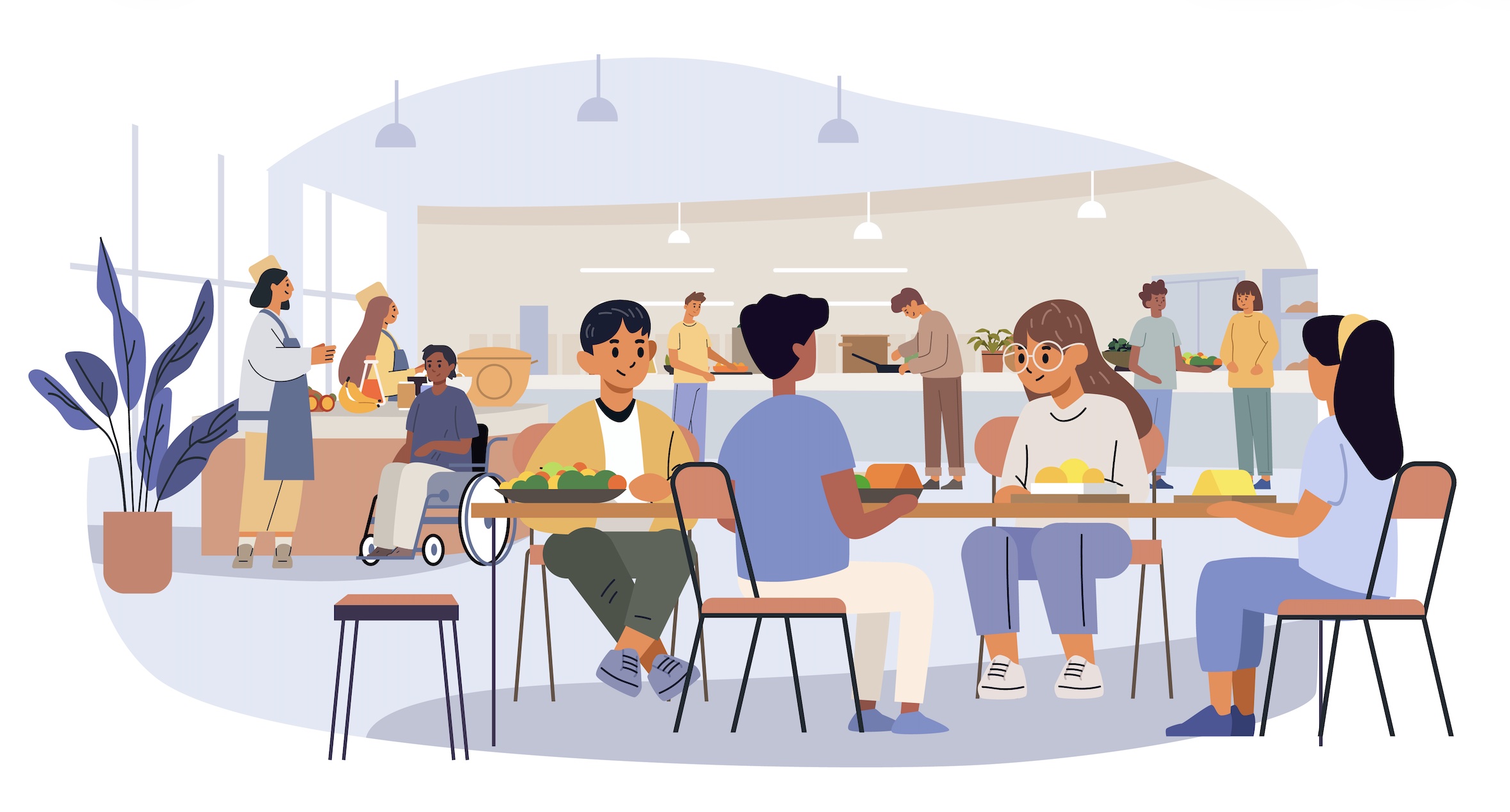

Are Freshman Students Asking, Where Do I Go to Make New Friends? Your Dining Program May Be a Part of the Problem

Every fall, a new class of freshmen arrives on campus carrying more than just suitcases and backpacks. They bring anticipation, anxiety, and a single, unspoken question:

Where do I go to make new friends?

Universities spend millions on recruitment campaigns that promise community, belonging, and connection. Brochures are filled with smiling faces, diverse friend groups, and vibrant campus life. But when students arrive, many quickly discover that connection is not automatic. It is not scheduled. And it is certainly not guaranteed.

Here is the uncomfortable truth: if you want to understand whether a campus truly delivers on belonging, do not start in the classroom. Do not start in the residence halls. Start in the dining program.

Because food is the excuse. Connection is the outcome.

The First 45 Days: A Critical Window

The freshman experience is defined in the first 45 days. This is when students decide, consciously or subconsciously:

  • Do I fit here?
  • Do I feel seen?
  • Do I have a place to go?
  • Is this my tribe?
  • Are these my people?

If those answers are unclear, doubt creeps in. When doubt takes hold, retention risk begins.

We often assume friendships form naturally through classes, crowded hallways, or shared living spaces. But today’s students arrive more digitally connected and socially uncertain than any generation before them. They know how to communicate, but they are less certain how to connect.

They are not asking for more programming. They are asking for more places.

Places where it is easy to sit down. Places where it is natural to stay. Places where interaction is not forced but inevitable.

That place should be dining.

Dining Is Not About Food. It Never Was.

Too many institutions still define dining as a transactional service:

  • Swipe card
  • Get food
  • Leave

That model is efficient. It is also completely ineffective at building community.

When freshman students ask, “Where do I go to make new friends?” they are not looking for a menu. They are looking for a social ecosystem.

High-performing dining programs understand this distinction. They are not designed around throughput. They are designed around human interaction.

Ask yourself:

  • Is your dining space a destination or a pass-through?
  • Do students linger, or do they leave immediately after eating?
  • Are there reasons to return beyond hunger?

If the answers to these questions are unclear, your dining program is not solving the freshman connection problem. It is contributing to it.

The Social Epicenter of Campus

On many campuses, the dining program can be the single most powerful social connector. It is the one place where:

  • All students must go
  • Multiple times a day
  • Across all demographics
  • Without needing an invitation

Nothing else on campus has that level of built-in frequency and inclusivity.

And yet, most dining programs fail to leverage this advantage.

Why?

Because they are designed as operations, not experiences.

SOCIAL ARCHITECTURE™ in Action

This is where SOCIAL ARCHITECTURE™ changes the conversation.

When dining is approached through this lens, it is no longer about feeding students. It is about bringing them together.

A properly designed dining environment considers:

  • Flow: How students move through the space and where they naturally socialize
  • Seating variety: Communal tables, small group settings, and flexible arrangements
  • Energy zones: Spaces that support both high-energy interaction and quieter connection
  • Visual openness: The ability to see and be seen without feeling exposed

These elements are not accidental. They are intentional.

They create what we call collision points where interaction happens organically.

Abundance Thinking vs. Scarcity Thinking

Most dining programs are built on scarcity thinking:

  • Limited hours
  • Limited meal periods
  • Unpredictable menu offerings
  • Platforms that run out of food and remain empty to reduce waste and save money

The result is a rushed experience that discourages connection.

Abundance Thinking flips that model:

  • More choice in how and where to engage
  • Expanded hours aligned with the student day
  • Predictable, full menu offerings designed around the Student Clock
  • Programs that do not disenfranchise athletes
  • Lower food and labor costs through smarter design
  • Highly profitable operations

When students feel there is space for them, physically and socially, behavior changes. They slow down. They open. They connect.

The Power of Curated Kinetics

Connection does not happen in static environments. It happens in spaces that feel alive.

Curated Kinetics is about creating movement, energy, and rhythm within the dining environment.

This can include:

  • Open kitchens that create visual engagement
  • Micro-events that feel spontaneous, not programmed
  • Varied day-parts that shift the energy of the space
  • Music, lighting, and layout that evolve throughout the day

Freshman students are drawn to energy. More importantly, they are drawn to shared energy.

They want to be where something is happening.

The High School Comparison No One Wants to Hear

Ironically, many students arrive on campus having experienced a stronger social connection in their high school cafeterias than they do in college dining.

Why?

Because high school cafeterias are:

  • Central
  • Predictable
  • Socially dense

Students know where to go. They know who will be there. They know they belong.

In college, we often remove that clarity. Dining becomes fragmented, oversized, or overly transactional.

And freshman students are left asking, again:

Where do I go?

Fixing the Problem Is Not Complicated. But It Is Intentional.

If your freshman students are struggling to make friends, do not default to more programming or more technology.

Start with dining.

Ask:

  • Is our dining program designed to create connection?
  • Does it encourage students to stay, not just eat?
  • Are we creating environments where friendships can begin naturally?

If the answer is no, the solution is not a menu change. It is a mindset shift.

Food Is the Excuse. Belonging Is the Outcome.

At its best, campus dining is not about nutrition. It is about community nutrition.

It is where strangers become acquaintances. Where acquaintances become friends. Where friends create a sense of belonging.

Freshman students are not explicitly asking for better dining programs.

But when they ask, “Where do I go to make new friends?” that is exactly what they need.

Final Thought

Universities that get this right do not just improve dining satisfaction scores. They improve retention, engagement, and student success.

Because when students find their people, they find their place.

And when they find their place, they stay.

So the next time you hear that quiet question from a freshman student, do not look to orientation schedules or student clubs for the answer.

Look at your dining program.

Because that is where the real answer should already exist.

And if it does not, that is not a student problem.

It is a leadership problem.
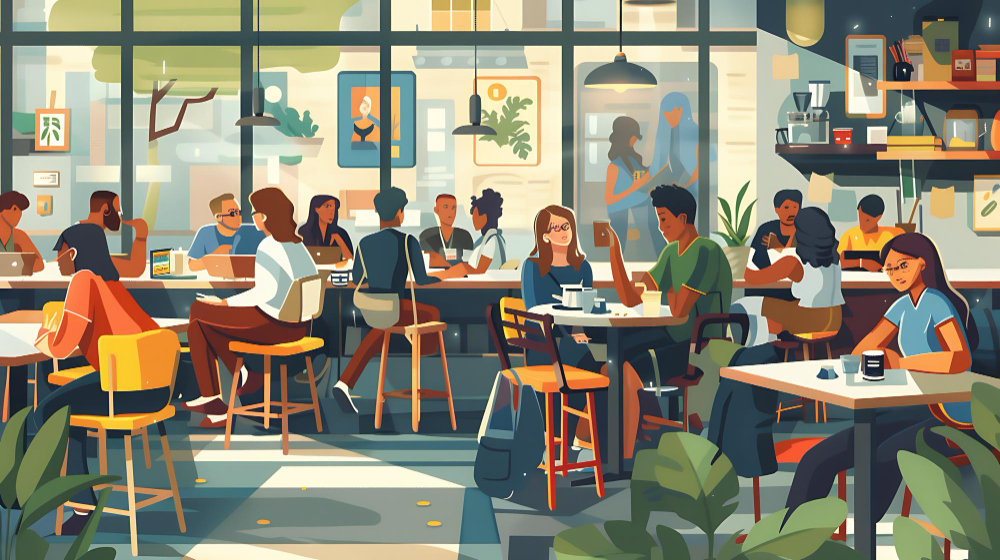
PKC Is Changing the Game: SOCIAL ARCHITECTURE™, Abundance Thinking, and Curated Kinetics

For decades, university dining facilities were designed primarily around efficiency and production. The focus was on moving large numbers of students through a system as quickly as possible. Tray lines, standardized menus, and centralized food production defined the traditional campus dining experience. While this model served operational needs, it often overlooked something far more important: the human experience.

Today’s students expect something very different from campus dining.

They are accustomed to vibrant food halls, urban markets, fast casual restaurants, and visually engaging retail environments. Food discovery happens through imagery, atmosphere, and experience. Dining is no longer simply about nourishment. It is about connection, exploration, and identity.

At Porter Khouw Consulting (PKC), we believe campus dining should function as one of the most important social engines on campus. Dining spaces should foster interaction, build community, and create environments that energize and welcome students.

That philosophy has led PKC to develop a powerful and distinctive framework that is transforming the way universities think about dining environments across North America.

SOCIAL ARCHITECTURE™.
Abundance Thinking.
Curated Kinetics.

Together, these three ideas form a strategic system that redefines campus dining as an experience-driven environment rather than a transactional food service operation.

SOCIAL ARCHITECTURE™: Designing Spaces for Human Connection

At the core of PKC’s philosophy is the concept of SOCIAL ARCHITECTURE™.

Traditional dining halls were often designed like industrial systems. Food moved down a line, students picked up a tray, sat down, ate quickly, and left. The physical design rarely encouraged conversation, exploration, or community.

SOCIAL ARCHITECTURE™ turns that approach on its head.

Rather than designing dining facilities strictly for operational flow, PKC designs environments that encourage human interaction. Food becomes the catalyst for connection.

Dining spaces become platforms where friendships form, ideas are exchanged, and campus culture takes shape.

When students gather around food, something powerful happens. Conversations begin. Relationships develop. Communities form. In many ways, the dining hall becomes the living room of the university.

Through SOCIAL ARCHITECTURE™, PKC intentionally designs spaces that support a wide range of social behaviors.

Large communal tables invite groups of students to gather and share meals together. Smaller seating areas allow for quieter conversations and focused interaction. Flexible seating arrangements allow students to move freely and find the type of environment that fits their mood and needs.

Food stations themselves are designed as social anchors within the room. Rather than hiding food production behind walls, open kitchens allow students to see the cooking process, interact with culinary staff, and experience food preparation as part of the dining environment.

This transparency creates energy and authenticity within the space.

Students no longer feel like they are moving through a cafeteria system. Instead, they experience a lively marketplace where food, people, and atmosphere come together.

The result is a dining environment that feels welcoming, dynamic, and deeply connected to student life.

Abundance Thinking: Replacing Scarcity with Choice

For many years, institutional dining operated within a mindset of limitation.

Menus were narrow. Hours were restricted. Options were few. The goal was consistency and cost control.

PKC introduced a different mindset called Abundance Thinking.

Abundance Thinking starts with a powerful principle. When students perceive that they have choice, variety, and generosity, their satisfaction rises dramatically.

Rather than presenting a single menu line, PKC organizes dining environments around multiple culinary destinations. Each station represents a different culinary experience.

Students might encounter

  • Global cuisines
  • Fresh-made pizza
  • Comfort food favorites
  • Plant forward options
  • Build your own bowls
  • Specialty sandwiches
  • International street foods

This variety encourages exploration. Students can return to the same dining facility multiple times a week and have a completely different experience each visit.

The concept of abundance extends beyond menu variety.

It also includes time, access, and flexibility.

Dining venues designed around Abundance Thinking often feature extended hours that better match student schedules. Multiple food venues across campus allow students to dine where it is most convenient. Flexible meal plans provide students with greater control over how they use their dining dollars.

When abundance replaces limitation, students begin to view dining differently. It no longer feels like an obligation. It becomes an opportunity.

Students stay longer, explore more, and engage with their peers in ways that extend far beyond the act of eating.

This shift dramatically improves the overall perception of campus dining.

Curated Kinetics: Bringing Energy and Movement to the Environment

If SOCIAL ARCHITECTURE™ defines the philosophy and Abundance Thinking shapes the operational mindset, Curated Kinetics delivers the visual expression of the concept.

Curated Kinetics is a design strategy that transforms dining spaces into energetic, retail-inspired food environments.

The inspiration comes from highly stimulating retail settings, including vibrant Japanese marketplaces and visually dense food environments where movement, color, and imagery create a sense of discovery.

In a Curated Kinetics environment, the room feels alive.

Large-scale food photography captures attention immediately. Bold color palettes define different stations. Edge-lit signage and layered lighting add visual depth. Dynamic graphics and illuminated displays guide students naturally from one culinary experience to another.

Instead of scanning printed menus, students make decisions visually. They see food first. They feel drawn toward the stations that excite them.

However, the most important element of Curated Kinetics is the word curated.

High-energy environments can quickly become overwhelming if they are not carefully organized.

PKC solves this by applying a disciplined design system that controls how visual energy is distributed throughout the space.

Every station follows a consistent structure.

Color palettes are carefully selected and assigned to specific culinary platforms. Food imagery is arranged in clean, geometric grids. Typography remains consistent throughout the facility. Countertops are kept clear of clutter and temporary signage.

The result is an environment that feels vibrant and stimulating while still maintaining visual clarity and order.

Students experience the excitement of a bustling food marketplace, but the space never feels chaotic.

This balance between energy and organization is the essence of Curated Kinetics.

Why This Framework Matters for Universities

Universities today face growing pressure to enhance the overall student experience.

Students and families evaluate campuses not only based on academic offerings but also on quality of life. Dining plays a surprisingly powerful role in shaping those perceptions.

When dining facilities feel outdated or transactional, students quickly disengage. When they feel vibrant, welcoming, and modern, they become central hubs of campus activity.

PKC’s integrated framework of SOCIAL ARCHITECTURE™, Abundance Thinking, and Curated Kinetics allows universities to elevate dining into something far more meaningful.

Dining becomes a place where students gather between classes, celebrate milestones, collaborate on projects, and build friendships that last well beyond graduation.

These environments contribute directly to student satisfaction, sense of belonging, and overall campus engagement.

They also support broader institutional goals such as retention and student success.

Transforming Dining from Transaction to Experience

The traditional cafeteria model treated dining as a transaction.

Students entered the line, selected food, paid with their meal plan, and left.

PKC’s framework transforms dining into an experience.

Students wander through a vibrant marketplace of food stations. They discover new cuisines. They meet friends. They linger in comfortable social spaces designed to encourage interaction.

Food becomes the starting point for something larger.

It becomes the backdrop for conversations, collaboration, and community building.

This transformation changes the role that dining plays on campus.

Rather than simply serving meals, dining facilities become essential components of the university’s social ecosystem.

The Future of Campus Dining

Across North America, universities that have embraced PKC’s philosophy are seeing measurable results.

Dining halls become lively gathering places instead of quiet eating rooms. Students stay longer and visit more frequently. Engagement rises, and the perception of food quality improves significantly.

These outcomes are not accidental. They are the result of intentional design, thoughtful planning, and a deep understanding of student behavior.

PKC’s approach recognizes that dining is about far more than food service.

It is about designing environments where people want to be.

Through SOCIAL ARCHITECTURE™, Abundance Thinking, and Curated Kinetics, Porter Khouw Consulting is helping universities reimagine the role of dining on campus.

Dining halls are no longer just places to eat.

They are places where campus life unfolds.

In that sense, Porter Khouw Consulting is not simply improving dining facilities.

Buckle up: PKC is changing the game.

Is Campus Dining Higher Education’s Hidden Superpower?

Food Is the Excuse. Connection Is the Outcome.

For more than 35 years, I have walked campuses across North America asking presidents, trustees, and boards a deceptively simple question:

Where does community actually happen?

Not where it is programmed.
Not where it is marketed.
Not where we hope it happens.

Where does it actually happen?

The answer is hiding in plain sight.

It happens two or three times a day.

Campus dining may be the most under-leveraged strategic asset in higher education. It is the single most consistent daily catalyst for building community, sparking engagement, and creating the friendship networks that ultimately determine whether students persist or depart.

Food is the excuse.
Connection is the outcome.

The Student Clock

If we are serious about belonging, we must understand what I call the Student Clock.

The Student Clock is not the administrative clock.
It is not the faculty clock.
It is not built around 8:00 a.m. to 5:00 p.m.

It reflects the natural rhythm of students’ lives.

If institutions fail to design around that rhythm, they miss the moment.

Recently, during a conversation with a group of high school students preparing for college, we asked a simple question:

“Where is the one place in school where you most look forward to seeing and connecting with your friends?”

They did not hesitate.

“The cafeteria.”

Not the classroom.
Not the gym.
Not the football field.

The cafeteria.

They described it as the social reset of their day, the place where friendships deepen, and laughter lives.

Then we asked another question.

“How late do you stay connected with your friends online?”

The answers came quickly.

“1:00 a.m.”
“2:00 a.m.”
“Sometimes 3:00 a.m.”

Think about that.

Teenagers are already operating on a social clock that runs well past midnight, even if it is happening digitally.

When they arrive at college, that digital connection becomes physical freedom.

They will not just message.

They will gather.

The question for institutional leaders is simple:

Where will that energy go?

Freedom Without Design Is Risk. Freedom With Design Is Strategy.

When students gain independence, they seek proximity to friends.

If dining is closed…
If meal plans are restrictive…
If late-night options are minimal…
If the environment feels transactional…

Students will simply go elsewhere.

But if dining is open…

If meal plans are flexible…
If menus are relevant and inclusive…
If the space invites students to linger…

Students will gather in the safest and most socially vibrant space on campus.

Late-night dining is not just an amenity.

It is a safety strategy.
It is a belonging strategy.
It is a retention strategy.

Meeting students where they are, on their clock, sends a powerful message:

We see you.
We understand you.
We are designing for you.

That message builds trust.

Trust builds belonging.

The Retention Equation

Let’s connect the dots clearly.

Connection → Belonging
Belonging → Retention and persistence
Retention → Enrollment strength

This is not soft language.

It is enrollment math.

Students rarely leave institutions where they have formed strong friendship networks.

Where are those networks most predictably formed?

Around tables.

Two or three times a day.

Dining is the only campus experience that intersects with nearly every residential student repeatedly.

Repetition builds familiarity.
Familiarity builds comfort.
Comfort builds belonging.

Belonging drives persistence.

SOCIAL ARCHITECTURE™ in Motion

Belonging does not happen accidentally.

It is designed.

That is SOCIAL ARCHITECTURE™, the intentional shaping of space, operations, and hospitality culture to foster human connection.

A dining hall designed purely for throughput produces transactions.

A dining program designed around the Student Clock produces community.

Round tables reduce isolation.
Communal seating sparks new relationships.
Micro-environments support different personalities.
Lighting shifts tone as the day evolves.
Staff engagement humanizes the experience.

When students linger, relationships deepen.

When they grab and go, opportunity evaporates.

Walk your dining hall at 9:30 p.m.

Is it alive?

Or is it dark?

The answer may be forecasting your retention rate.

Abundance Thinking

Too often, dining is evaluated through a lens of scarcity:

How do we cut costs?
How do we minimize labor?
How do we protect margin?

These are necessary questions.

But they are incomplete.

Abundance thinking reframes the conversation:

How do we leverage dining as the daily engine of engagement?
How do we design meal plans that encourage gathering?
How do we align hours of operation with student behavior, rather than administrative convenience?

Consider this.

You could lower your utility bill at home by shutting off hot water for an hour every morning, several hours each afternoon, and again every evening.

Technically, you would save money.

But no rational household would design life that way.

Why?

Because hot water is not a luxury.
It is basic infrastructure for daily living.

Now think about dining.

If connection drives belonging, and belonging drives retention, then dining access is not a luxury.

It is infrastructure.

Turn it off at the wrong times, and engagement drops with it.

Margins follow meaning.

When students feel connected, they stay.

When they stay, enrollment stabilizes.

When enrollment stabilizes, financial strength follows.