Location | Shibuya, Tokyo
There are cities that move quickly. And then there is Tokyo, a place that moves with purpose, curiosity, and a hunger for innovation disguised as tradition. This weekend, Madison and I embraced that spirit, beginning with breakfast at Flipper’s and lunch at Jikasei MENSHO. Each offered insight into Tokyo’s cultural pulse and powerful lessons about food, service, and human behavior.
Morning: A Lesson in Softness and Patience
Breakfast at Flipper’s in Shibuya
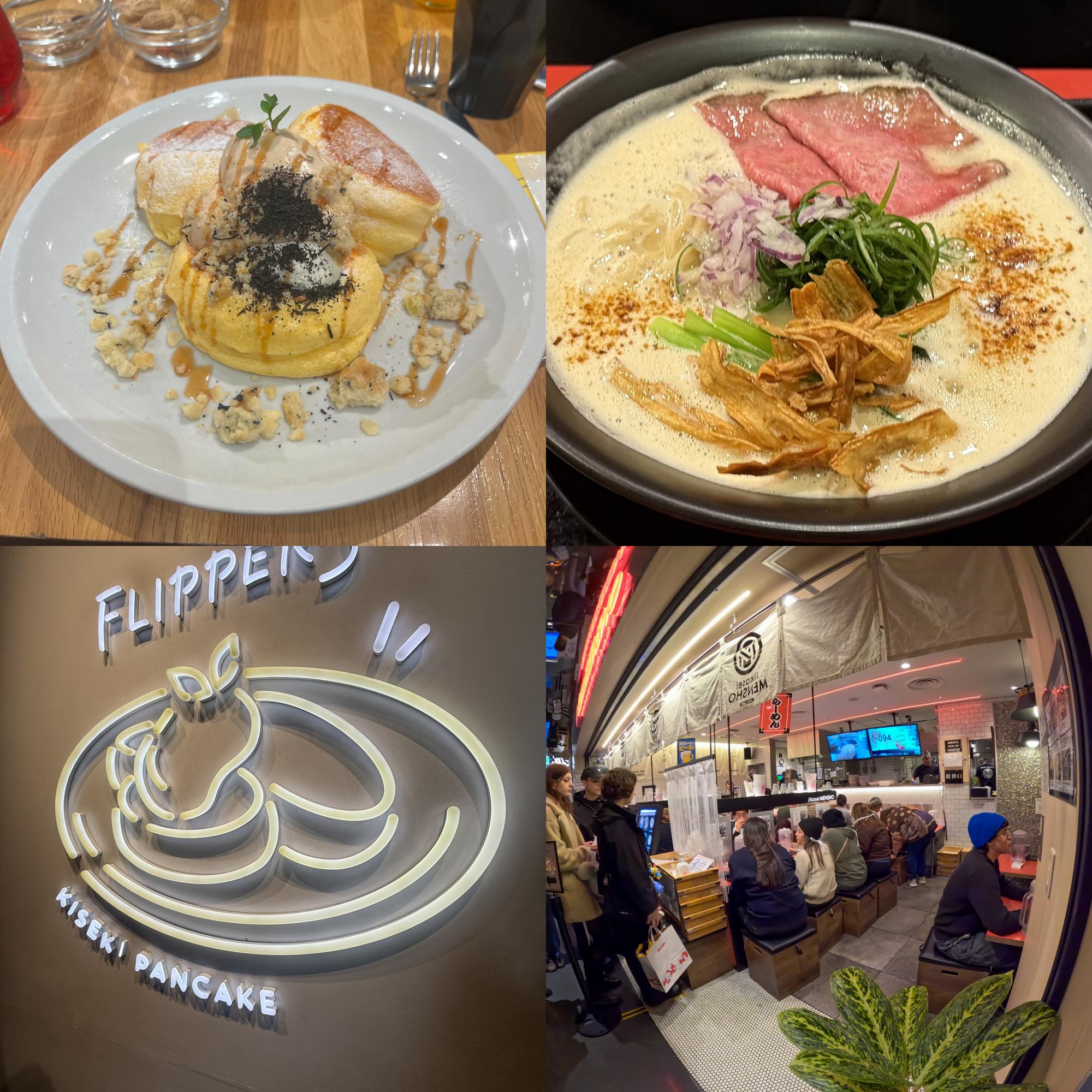
We began the day at Flipper’s, known for its soufflé-style pancakes that have become iconic in Tokyo. They are often described as cloud-like or jiggly, but those words do not fully capture the experience. These pancakes are an exercise in restraint and technique. The batter is light. The texture is airy. The presentation is intentional.
Flippers operates with an Egg Farm to Table philosophy that emphasizes ingredient integrity and traceability. Even the savory breakfast plates reflect craftsmanship. Nothing feels rushed.
In a world preoccupied with speed, Flipper’s asks you to slow down. The pancakes require patience. They are made to order and often require a short wait. That wait becomes part of the ritual. When the plate arrives, the experience feels earned.
One bite shifts the energy of the morning. Noise softens. Attention sharpens. The environment invites presence.
This matters.
Experience does not begin with efficiency. It begins with ritual and delight. What if breakfast on a university campus were more than a transaction? What if it were designed as a daily moment of belonging and reflection?
At Flipper’s, breakfast is not consumed. It is experienced.
Midday: Ramen as Innovation and Inclusion
Lunch at Jikasei MENSHO in Shibuya PARCO
By midday, our curiosity shifted from sweet to savory. We made our way to Jikasei MENSHO, located in the lower level of Shibuya PARCO. It is consistently regarded as one of the district’s most compelling ramen destinations.
What distinguishes Jikasei MENSHO is not simply the quality of its broth or handcrafted noodles. It is the philosophy behind the menu. This is ramen that respects tradition while embracing innovation.
Classic tonkotsu and shoyu bowls are present, but so are bold interpretations, including vegan miso ramen and plant-forward creations that expand the category without diluting authenticity.
That balance is intentional.
Inclusion is not treated as an afterthought. It is embedded in the culinary strategy. Dietary diversity is welcomed without sacrificing flavor, depth, or character.
The ordering system is streamlined through digital kiosks. Payment is seamless. Service is efficient. Yet the soul of the experience remains human. The counter seating creates intimacy. The open kitchen reinforces transparency. Every bowl is plated with care.
The noodles possess precision. The broth carries complexity. The space hums with focused energy.
It is not fast food. It is a disciplined craft delivered with clarity.
Why These Two Experiences Matter
Breakfast at Flipper’s and lunch at Jikasei MENSHO are more than culinary stops. They are micro-lessons in cultural design.
Experience Over Transaction
Both establishments elevate simple dishes into memorable events. Pancakes become sculpture. Ramen becomes narrative. Nothing feels commoditized.
Craft as Culture
In Tokyo, even everyday food is prepared with reverence. Detail signals respect. Respect builds loyalty.
Inclusion Through Innovation
Offering vegan ramen or reimagined breakfast classics is not trend chasing. It reflects curiosity and a willingness to evolve while maintaining identity.
Environment Shapes Behavior
Flipper’s invites softness and connection. Jikasei MENSHO invites intensity and focus. Design influences mood. Mood influences memory.
A Broader Reflection
Walking through Shibuya this weekend, Madison and I were reminded that curiosity is a discipline. It requires paying attention to nuance. It demands that we look beyond flavor and examine behavior, flow, density, and emotion.
Tokyo operates at a high frequency. Yet within that energy, there is calm intention. Space is used wisely. Ritual is respected. Technology enhances rather than replaces human interaction.
For leaders designing food environments, these observations are instructive.
Design for ritual.
Honor craft.
Embrace inclusion.
Remove friction without removing humanity.
Food spaces shape culture. They influence connection. They reinforce identity.
A pancake can teach patience.
A bowl of ramen can teach respect.
Curiosity fuels innovation. Innovation fuels relevance. Relevance fuels belonging.
And belonging, whether in a city or on a campus, determines whether people simply visit or choose to stay.
Tokyo rewards those who pay attention.
This weekend, we are paying attention.