

Planning While Others Pause: How Institutions Win During the Quiet Season

Thanksgiving is in the rear-view mirror, campuses are quiet, and most people are easing into the slowest stretch of the academic year. But here is the reality. This quiet season is where institutions either gain ground or fall behind. In the next seven months, you can increase participation, strengthen student value, improve financial returns, and redefine the dining experience for your Fall 2026 freshman class. Or you can wait until the spring rush hits, when it becomes harder to change course and far more expensive to do so.

For 35 years, I have watched the same pattern unfold across North America. Institutions that use this window between Thanksgiving and early spring to plan, evaluate, and negotiate end up with stronger programs, more value for students, and better financial outcomes. Institutions that pause or assume they will get to it later almost always leave value on the table.

This quieter stretch of the year is not downtime. It is a strategic time.

The Quiet Season Advantage

Every year, the late November to January window creates a rare alignment of conditions. Campuses are calmer, demand on leadership slows, and operators can be more responsive. At the same time, FY 2026 budgets, contract decisions, and first-year experience strategies begin to take shape. While many institutions take a breather, strategic campuses use this moment to gain ground.

The decisions you make in the next seven months will directly influence the value your Fall 2026 freshman class perceives when they arrive. Their first 45 days on campus remain the most critical window for retention, connection, and emotional well-being. Dining is not just a meal service. It is the most powerful campus-wide platform for community building and persistence. It is also one of the largest drivers of institutional revenue.

A one percent increase in fall-to-fall freshman retention can result in millions of dollars in new tuition, room, and board revenue. Small changes in dining can create those gains.

Waiting delays progress. Acting now multiplies it.

What Institutions Can Do Right Now

Successful campuses do not wait for the spring planning crunch. They act during this quieter window when there is time to think, evaluate, and negotiate strategically. Here is what we help institutions do.

  1. Evaluate the dining experience with fresh eyes.

Look closely at hours, menu variety, traffic patterns, late-night access, and the real student value equation. Are you offering enough? Are you offering the right things? Is participation where it needs to be. Small improvements now can create significant Fall 2026 gains.

  1. Prepare for your next contract cycle.

If FY 2026 or FY 2027 are relevant planning years, this is the moment to review operator performance and assess whether your financial terms are aligned with your current needs. Most institutions underestimate how much leverage they have right now and overestimate how much leverage their food service provider has.

  1. Rebuild participation in your core business model.

Meal plan participation drives everything. If participation dips, satisfaction, housing occupancy, and freshman persistence decline with it. If participation strengthens, everything improves. This is the time to model participation growth for Fall 2026 without raising meal plan prices.

  1. Use the timing to your advantage.

Negotiating in the quiet season gives institutions more leverage. Operators are planning their own budgets and want predictability. When you come to the table early, with clarity and data, you usually win. When you wait until late spring, you lose margin, menu freedom, and influence.

  1. Fix the problems that lingered all semester.

Long lines, inconsistent food quality, limited hours, poor labeling, and weak dietary accommodation do not resolve themselves. Addressing them now, with a structured plan and clear operator accountability, positions you for a stronger FY 26 and FY 27.

Why Some Institutions Fall Behind

Institutions struggling today tend to show the same signs. Declining participation, rising student complaints, weakened dining value, financial erosion, retention pressure, and declining housing occupancy.

This did not happen overnight. It happened because too many campuses waited until problems were urgent instead of using strategic windows like the one you are in right now.

Too often, institutions are told their only options are to cut services or raise meal plan prices. That approach shrinks program value, frustrates students, and damages retention. PKC does neither. We expand your program, improve your finances, and keep meal plan prices flat.

You do not fix dining by shrinking it. You fix it by strengthening it.

A Case Example: Winning Early Instead of Waiting Late

One campus PKC supported faced declining participation, long lines, menu fatigue, and financial underperformance. They were told by their operator that this was not the time to address the issues. Instead, the institution partnered with PKC right after Thanksgiving.

Within 90 days.

  • We expanded hours
  • Introduced new craveables
  • Added late-night service
  • Renegotiated contract terms
  • Improved consistency and speed
  • Strengthened financial performance
  • Increased perceived student value

Participation increased before the new freshman class even arrived. Their Fall cohort entered a dining program already operating at a higher level. Housing occupancy increased by fourteen percent.

That is the power of acting early. The Fall 2026 freshman class will feel the impact of decisions made in January, February, and March, not July.

Your Window Is Open Right Now

You have a strategic window over the next seven months, too:

  • Expand your dining program
  • Increase participation
  • Strengthen retention
  • Improve the freshman on-campus experience
  • Boost your financial position
  • Renegotiate your contract
  • Reinforce operator accountability
  • Keep meal plan prices flat
  • Redefine your dining program for Fall 2026

If you wait until the spring rush, you lose leverage, options shrink, and opportunities disappear. If you start now, you control the direction and the outcomes.

The PKC Guarantee

PKC expands your dining program, improves your finances, and keeps meal plan prices flat.
Nobody negotiates dining contracts harder or smarter.

If we do not deliver both program expansion and financial improvement, you pay nothing.

If you want to explore your contract strategy or operator performance heading into FY 2026, I am available anytime.

This quiet season can become your competitive advantage. While others pause, you can move.

Your Fall 2026 freshman class will benefit from it through higher participation, stronger satisfaction, and a dining experience worthy of the community you are building.

MATTERING AT THE TABLE: HOW DINING, SPACE, AND SOCIAL ARCHITECTURE™ SHAPE STUDENT BELONGING

For more than thirty-five years, I have watched dining reshape students, campuses, and entire campus cultures. The deeper I look, the more clearly I see that dining is never just about food. It is about mattering. It is about belonging. It is about emotional well-being and identity. It is about how colleges design the daily experiences that tell students you are seen, you are valued, and you belong here. These are the principles at the heart of SOCIAL ARCHITECTURE™ and Abundance Thinking, the frameworks that have guided my work for decades.

During a recent campus visit, I studied the lived experience of students, faculty, and staff. Across every conversation and observation, one truth emerged. Students consistently identified the dining hall as the place where they feel that they matter. This insight is powerful because it reveals dining as the emotional core of campus life.

Dining is the most universal daily ritual of any college community. It is where students gather, connect, decompress, form friendships, and build memories that last long after graduation. When designed with intention, it can become the most powerful engine of belonging on campus.

MATTERING AS A DAILY HUMAN NEED

Mattering is foundational to human development. It means believing your presence is noticed, valued, and meaningful. When students feel they matter, they engage with more confidence. They participate. They take academic and social risks. They build friendships that sustain them through challenge.

When they do not feel they matter, the impact is immediate. Students withdraw from community life. They avoid common spaces. They sidestep opportunities. They may even isolate themselves. Over time, this affects their learning, their well-being, and their sense of place.

Mattering is shaped not only by policies or programs but by everyday rituals. One of the strongest of those rituals is eating.

FOOD AS IDENTITY, MEMORY, AND CONNECTION

Food is memory. Food is home. Food holds culture, lineage, and emotional resonance. For many students, especially international and first-generation students, food is one of the strongest remaining threads connecting them to where they come from.

Global flavors communicate respect for identity. A familiar dish says your story belongs here. A diverse plate says your culture matters. When dining programs rely too heavily on a narrow or monocultural approach, students from many backgrounds receive the opposite message. They feel peripheral rather than central.

Mattering is strengthened when food validates who students are.

SOCIAL ARCHITECTURE™ IN DINING ENVIRONMENTS

SOCIAL ARCHITECTURE™ is the intentional design of physical spaces to increase meaningful social engagement. Dining environments are one of their most impactful arenas because they intersect academic, social, emotional, and cultural dimensions of student life.

A dining hall can nurture community, but it can also overwhelm. Large centralized spaces often become loud, crowded, and overstimulating. Some students thrive in this energy. Others experience sensory fatigue or anxiety. When a single space is expected to meet the needs of every student at every hour, mattering becomes unevenly distributed.

SOCIAL ARCHITECTURE™ requires designing environments that reduce stress rather than intensify it. It asks campuses to create multiple ways for students to gather and multiple kinds of spaces where they can feel grounded.

THE LIMITS OF CENTRALIZATION

For decades, many institutions relied on centralized dining for efficiency. Today, that model often conflicts with how students actually live. Students crave mobility, flexibility, autonomy, and variety. They want dining that fits their schedule rather than dictating it.

A single dining hall cannot fully support the rhythms of a modern student body. Students benefit from smaller venues for quick meals, quiet zones for sensory comfort, late-night spaces that keep them safely on campus, and options that reflect the diversity of global cuisine.

Centralized architecture paired with decentralized student life creates friction. That friction affects belonging.

ABUNDANCE THINKING AND NEW POSSIBILITIES

Abundance Thinking encourages campuses to ask what is possible rather than what is practical. Instead of assuming dining must function within rigid boundaries, we reimagine existing spaces as untapped assets.

Historic buildings, underused rooms, student-favored nooks, and architecturally rich environments can become decentralized dining satellites. These spaces can provide comfort, beauty, social connection, and low-labor food access.

When we think abundantly, we start designing for what students feel rather than just what they need.

DINING AND EMOTIONAL WELL-BEING

Dining is directly connected to mental and emotional health. Students navigate academic intensity, social pressure, identity development, and personal challenges daily. Dining can soothe or strain these pressures.

A well-designed dining experience can ground a student during stress.
A quiet table can offer a retreat from overstimulation.
A culturally familiar dish can rebuild emotional confidence.
A shared meal can counter isolation.

These are not small gestures. They form an everyday emotional infrastructure that determines how students feel on campus.

HONORING THE EVERYDAY EXPERIENCE

Many campuses celebrate dining at big events and signature meals. These moments are memorable, but mattering is not built on highlights. It is built on repetition. It is built on the reliable, restorative experiences of a weekday lunch, a post-exam meal, or a late evening study break.

SOCIAL ARCHITECTURE™ seeks to elevate the everyday. It makes belonging a daily occurrence, not an occasional one.

A CAMPUS WHERE EVERY STUDENT FEELS THEY MATTER

The future of dining is not about trendiness or equipment upgrades. It is about belonging. It is about whether students feel welcome in every dining space, whether they can access food that honors identity, whether they have multiple places to gather, and whether the environment reinforces their value.

To build such a campus, we must design experiences that affirm mattering. We must use SOCIAL ARCHITECTURE™ to create spaces where students naturally connect. We must use Abundance Thinking to imagine more than efficiency. We must honor the diversity of student lives by giving them dining options that reflect who they are.

When we do this, we do more than improve dining. We strengthen the entire student experience. Because when students feel they matter, everything else becomes possible.

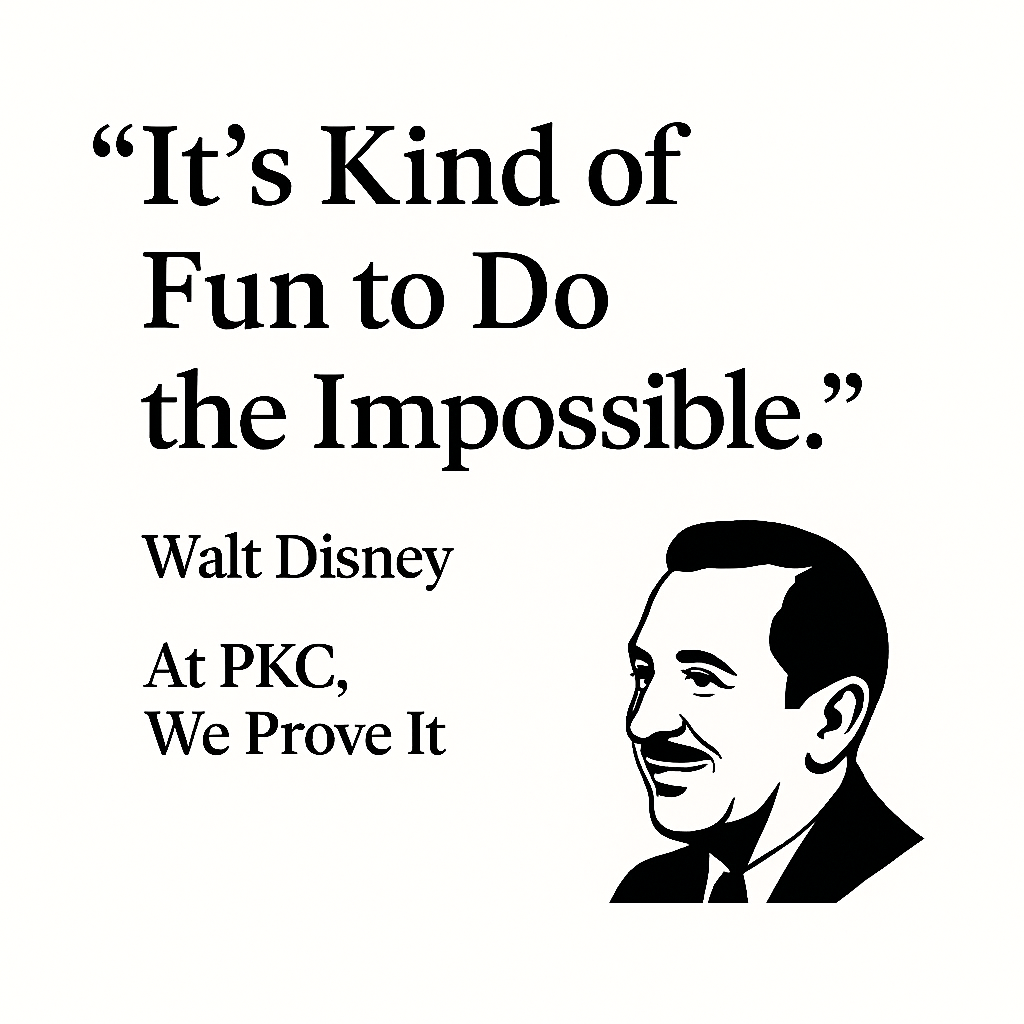
“It’s Kind of Fun to Do the Impossible.” Walt Disney Said It. At PKC, We Prove It.


PKC. The only higher-ed dining consulting firm in North America that guarantees results.

Higher education leaders are under more pressure today than at any point in the last twenty years. Declining enrollment, rising labor costs, aging facilities, affordability concerns, and exhausted parents have created a storm that hits dining harder than almost any other campus function. Everyone wants more. Nobody wants to pay more. And institutions feel trapped in a no-win scenario.

But here is where Walt Disney had it right. It is fun to do the impossible. And in campus dining, what everyone else calls impossible, PKC calls a normal Tuesday.

Let me be direct. PKC is the only higher-ed dining consulting firm in North America willing to put its fee and reputation on the line for your institution. Everyone else talks about creating value, improving performance, or delivering a better contract. We guarantee it.

That is not marketing fluff. That is a performance promise backed by decades of experience.

The PKC No Fee Guarantee

Here is the simplest and strongest value proposition in higher education dining.

If we do not increase your bottom-line remuneration above your current level, you pay nothing.

Zero risk to you. Total accountability from us.

Your institution gets a complete strategic plan, a full rebid process, a fully negotiated dining contract, and a blueprint for a next-generation dining program. If we do not generate new revenue, you keep all of that work for free. No other consulting firm in this industry is willing to make that commitment.

You have to ask yourself why.

In my world, guarantees are simple. If we cannot create more value for your students and deliver real financial results for your institution, we do not deserve to be paid. That is accountability. That is alignment. And that is why presidents and CFOs lean in the moment they hear the words No-Fee Guarantee.

Now, let me explain what makes this model so powerful.

Where doing the impossible becomes fun

Most leaders believe that improving dining requires raising student meal plan pricing. They assume better hours, better menus, better labor, better retail, or better hospitality must lead to higher rates. They assume quality and affordability are locked in a constant tug of war.

That assumption is wrong. In fact, it is often the biggest barrier holding institutions back from creating the dining program they want and the financial outcomes they need.

When PKC rebuilds your dining strategy, five things happen immediately. And none of them require a price increase.

After we:

  • Expand your program
  • Add hours of operation
  • Elevate menus
  • Improve quality and customer service
  • Modernize retail
  • Elevate the student experience

…we still do not recommend raising student meal plan pricing.

Why?

Because the issue isn’t affordability.
The issue is your contract and perceived value.

And that’s the part most leaders have not fully grasped.

Your students are not the problem. Your contract is.

Old dining contracts frustrate students and quietly drain millions from institutions.

Here’s how it typically plays out:

  • Operators protect their margin.
  • Institutions absorb the loss.
  • Meal plan participation declines.
  • Student retention weakens.
  • Revenue evaporates.

This is a national pattern, not a campus anomaly.

Most dining contracts older than four years have eroded so significantly that institutions are unknowingly losing hundreds of thousands to millions of dollars every year.

Why? Because:

  • The contractor hasn’t competed for your business in years.
  • Financial terms no longer keep pace with inflation.
  • Transparency is limited.
  • Catering valuations are outdated.
  • Retail breakpoints are misaligned.
  • Meal plan breakage is worsening.
  • Capital contributions serve the contractor’s priorities, not the institution’s.

The result is predictable:
The contractor protects their margin.
Your institution absorbs the financial shortfalls.

What Happens When We Rebuild Your Contract

When we rebuild your strategy and rebid your dining contract, two things happen every time.

First, your dining program improves dramatically.

  • Hours become flexible and aligned with “the student clock”.
  • Menus become predictable, global, and freshly prepared.
  • Retail becomes whole again.
  • Allergen and nutrition integrity improve.
  • Hospitality culture becomes consistent.
  • Student trust increases.
  • Meal plan participation rises.
  • Retention stabilizes and increases.
  • Housing occupancy improves.
  • The dining program strengthens the campus community.

Second, your institution earns significantly more.

We modernize your financial terms.

  • We modernize your financial terms.
  • We remove confusing language designed to disadvantage and trap you.
  • We structure transparent reporting.
  • We build compliance directly into the contract.
  • We force true operator competition.
  • We remove vague language that disadvantages you.
  • We align capital with your actual needs, while protecting your position of leverage.
  • We increase bottom-line annual remuneration
    in many cases, dramatically.

And again, we are willing to guarantee the outcome.

Why We Can Guarantee Our Results

Presidents and CFOs often hesitate when they hear our guarantee.
They ask how we can make such a promise.

The answer is simple:

  • We know how much money is hidden in outdated dining contracts.
  • We know how much performance is lost through misaligned expectations.
  • We know the financial upside unlocked through true operator competition.

When we fix your program, we can fix the contract. 

When you fix the program, participation rises.
When participation rises, retention rises.
When retention rises, tuition revenue rises.
When retention and participation rise together, housing revenue rises.

All without raising meal plan pricing.

If your consultant will not guarantee their results, ask why.

You’ll hear a lot of claims:

  • Many firms say they can improve dining.
  • Several say they can negotiate a stronger contract.
  • Many say they create value.
  • A few say they “know the operators.”
  • Some say they improve the student experience.

But only one firm guarantees its results.
Only one firm takes the financial risk off your institution.
Only one firm ties compensation directly to performance.
Only one firm says: If we fail, you pay nothing.

PKC.

We do not hide from accountability.
We run toward it.

Because when you know you can deliver what others call impossible, it becomes fun.

If You Wander Into Shark-Infested Waters and Get Bitten, Is It the Shark’s Fault?

If you swim into shark-infested waters and get bitten, it isn’t the shark’s fault. The shark is simply behaving according to its nature. It’s doing what it’s designed to do: detect weakness, strike when the moment is right, and survive. The ocean is its domain. You, on the other hand, chose to enter its territory.

In our world, college and university dining follows the same logic. The sharks in this analogy are the food service contractors. They aren’t villains. They are highly evolved, instinct-driven entities that have a primary purpose: to feed themselves. They are accountable to their shareholders, not your students. Expecting them to prioritize your institution’s mission over their own financial survival is like expecting a shark to go vegan

Understanding the Shark’s Nature

Food service contractors aren’t inherently bad. They are sophisticated, profit-driven machines that follow the terms, conditions, and provisions they build into the contract. If your agreement rewards bottom-line growth and/or expense reduction over student satisfaction, they may curtail menus and hours of operation, compromising the student experience. If you agree to let them use meal plan equivalencies and meal plan DB excessively in retail locations, they could quietly profit from higher food costs and meal plan breakage (lower meal plan participation). If you don’t ensure program compliance and audit or verify reports, they might take advantage of the information gap.

It’s not malice. It’s instinct. They are doing exactly what their business model demands.

That’s why it’s naïve when institutions express shock that their food service partner stops investing in quality, service, or staffing after the honeymoon period. You can’t fault the shark for biting. It’s built to bite. You can only fault yourself for maybe swimming too close without adequate protection (representation).

Why Colleges Keep Getting Bitten

Over the last 35 years, I have watched countless colleges swim confidently into these waters, smiling as the contractor waves a check for millions in upfront capital. The institution sees relief from deferred maintenance and a promise of shared goals. What they often fail to see is the fine print that, unbeknownst to the University, transfers risk, effectively eliminates the school’s negotiating leverage (checkmate) restricts flexibility, and binds them to a predator that will feed off their own students’ meal dollars.

A 10-year contract could promise at least $10 million in capital, but the payback schedule, combined with other provisions, could result in an investment buyout obligation that, in some cases, far exceeds the original investment. It’s not free money.

Who’s to Blame When the Bite Comes?

Every time a school calls us after being frustrated  by their contractor, revenue down, problematic food quality and consistency, student and parent complaints up, and financial transparency gone, I ponder the same question: Have they finally had enough?

They’ve been patient. They’ve been understanding. They’ve believed the promises and tolerated the excuses. But deep down, they know the truth.

The mistake isn’t partnering with a contractor. The mistake is assuming that they will act against their fundamental business model and nature. Contractors will always structure agreements that maximize their return on investment. They’re supposed to. That’s how they survive.

The real fault lies in ignoring the warning signs, thinking it will be different this time, accepting the bait, and believing that “partnership” means shared priorities.

Redesigning the Ecosystem

At Porter Khouw Consulting, we guide our clients in designing a better ecosystem. Through strategic planning, SOCIAL ARCHITECTURE™, and our Success Fee Guarantee, we help colleges rewrite the rules of engagement.

We align contracts so that contractors thrive only when the institution does. If meal plan participation increases, if students are happier, if financial performance improves, then everyone wins. But if the contractor under-delivers, they don’t get rewarded for mediocrity.

This isn’t about punishment. It’s about creating an incentive framework that handsomely rewards your management company for delivering an exceptional program (one you defined initially) every meal period, every day.

How Institutions Invite Trouble

When a college signs a contract without an independent consultant, it’s like jumping into the ocean without checking the tides. The water looks calm, the deal looks friendly, but beneath the surface is a well-honed predator that might understand leverage, when it comes to the complexities of a food service management agreement, far better than you might.

Common mistakes include:

  • Accepting “free” capital, signing bonuses, etc., without calculating and being prepared for the true cost of amortization and payback
  • Agreeing to “cost-plus” terms that remove the incentive to control expenses
  • Allowing vague KPIs that can’t be audited and are not directly tied to program execution
  • Failing to require transparent reporting or independent performance reviews
  • Granting advance payments of meal plan monies
  • Letting the contractor design or heavily influence policy such as meal plan design, hours of operation, methods of service, menu variety and selection, pricing, and participation requirements

These aren’t random accidents. They are predictable outcomes of swimming in the wrong place without protection. That’s why having a skilled and totally independent, zealous advocate who is a subject matter expert, someone whose sole job is to protect your interests, shouldn’t be optional.

Changing the Game: SOCIAL ARCHITECTURE™

When we help an institution reimagine its dining experience through SOCIAL ARCHITECTURE™ and abundance thinking, we focus on more than just operations and numbers. We view dining as the emotional and social core of the campus, the most powerful tool a university has, daily, to connect students, foster belonging, and boost fall-to-fall student retention and enrollment.  Contractors see dining as a profit center. We see it as a community-building and reinforcement engine.

When residential life becomes a hollow promise due to a mediocre residential dining program, the entire ecosystem weakens. Retention can drop. Housing occupancy can decline. Emotional well-being suffers. Food insecurity increases. And the program can become more profitable for the contractor.

Building the Right Contract: The Power of Strategy and Oversight

The right contract is your shark cage. It doesn’t eliminate the predator. It keeps everyone safe.

At PKC, we build performance-based agreements that:

  • Tie management fees to measurable outcomes
  • Protect the institution’s capital investment and policy control
  • Require regular audits, transparency, and true financial reporting
  • Structure agreements so that you cannot be checkmated and forced to capitulate
  • Define what success looks like and what happens when it isn’t achieved

That’s how you turn a contractor-school relationship into a managed ecosystem. You start navigating by design. And while you’re focused on teaching, housing, and enrollment, PKC can stand quietly on the shore, your lifeguard, keeping an eye on the fins.

The Hard Truth About Blame

If you get bitten, it’s not the shark’s fault. Blame wastes energy. Strategy builds resilience.

The strongest institutions are those that learn to read the water, understand the currents, and choose partners who align with their mission. The weakest are those who keep pretending the shark is a friend simply because it smiles while circling.

The Lesson

Leadership isn’t about eliminating risk. It’s about managing it intelligently. Know what drives your partners, define your ecosystem clearly, and never forget whose ocean you’re in.

Because in this business, the moment you forget that sharks are sharks, you stop leading and start bleeding.

And when that happens, it helps to know that someone’s still watching the water. PKC could be your lifeguard.